A full day in San Francisco was mine
to exploit as I saw fit. My first reaction was to look at hiring a car but,
recalling how expensive it is to park a car in the city and how vigilant the
parking attendants are, I fell back on old posts to remind me of the
possibilities that were mine through the medium of public transport.


On the western side of the pond was an unlikely pair of branch-fellows. A White-tailed Kite perched slightly above a Cooper’s Hawk.


From here, I had to move quickly to return my bicycle. I took the route out past Mayfield and Charleston Slough.

From Terminal Blvd at Google Earth ref; 37 26 0.61N 122 6 0.17W, San Antonio Road runs south for 3kms, crossing the Highway 101 to the San Antonio Caltrain Station at San Antonio and Alma (Google Earth ref; 37 24 26.94N 122 6 26.93W). A day-ticket on Caltrains cost US$ 14 AS AT December 2013.

CalTrains leave from San Francisco
Station at the bottom of Fourth Street (Google Earth ref; 37 46 35.96N 122 23
41.54W), just a few blocks from the hotel and with an 8-hour body-clock head
start, the 06.11 was a breeze. I had hired a bike the night before and strapped
it into the bike compartment for the hour or so ride to California Avenue (Google
Earth ref; 37 25 44.22N 122 8 29.23W). From here, it is about 4-5kms to the
Palo Alto Duck Pond and The Lucy Evan’s Baylands Interpretative Center.
American Robins,
California Towhees, Ruby-crowned Kinglets, Anna’s Hummingbirds, Yellow-rumped Warblers and Cedar Waxwings enlivened the ride until
I arrived at just before 08.00. The top of the tide was 07.50, so there were
plenty of birds pushed up onto the roosting areas.
One of these spots was immediately
beneath the approach path for the local airport and a small prop plane came
into land and put a fun-sized mixed flock of American Avocet, Willet and
Marbled Godwit to flight.
I wanted to move quickly on to the
boardwalk to see if any rails had been pushed up out of the marsh by the high
tide. It was predicted to reach 2.3m this morning, but as it turned out, 2.3m
is not quite enough. The tide tables show that it does get higher than this
with 2.9 and 3m tides due over the following week. I guess that would inundate
most of the marsh and the rails would be up on the boardwalk. Timing.
The surge had forced a few Least Sandpipers up onto the edge of
the marsh and they were very cooperative, gleaning and bathing very close to
the platform at the end of the boardwalk. A small mixed flock of Dunlin and Western Sandpiper joined them and they all looked anxious to get
back to the mud as soon as the water receded.
This would likely be a while, so I
returned to the slough and the duck pond to watch large numbers of Northern Shovelers and Canvasback.

On the western side of the pond was an unlikely pair of branch-fellows. A White-tailed Kite perched slightly above a Cooper’s Hawk.
The duck pond held more shovelers
(actually if I mention any bird associated with the water, even if my writing
tone sounds a little moist, make a mental note that there were lots of
shovelers in view at the same time. That will save a lot of repetition), Mallard and a few Ring-billed Gulls. The Boneparte
Gulls were seen on the slough but were reluctant to come onto the (fresh
water?) of the duck pond.
The water should have receded a bit
by now and a few birds were flying out from the roosts to make first tracks in
the fresh mud.
Rail Alley, a wide ditch in the marsh
that passes beneath the boardwalk already had some very rail evoking prints,
but the bird was not to be seen. Out on the bay, the water was fantastically
still and a Brown Pelican nearly
stalled as it flew over and suddenly spotted something near the surface.
Clarke’s Grebes
kept a respectable distance from the platform, but the Least Sandpipers were
content to feed near the margins and leave the tide-chasing to the other
species. A Song Sparrow sat in the good light a waited for me to trip over my tripod before firing off a couple of shots.
As I returned to fetch my bicycle to
continue on towards Mayfield and Charleston Slough, I happened to turn back and
notice a Northern Harrier making a
perfect flypast of the platform and boardwalk. Timing.
Birds seen; 57
Canada Goose 35, Gadwall 4, Mallard
25, Cinnamon Teal 2, Northern Shoveler 800, Northern Pintail 30, Green-winged
Teal 55, Canvasback 60, Lesser Scaup 2, Ruddy Duck 4, Pied-billed Grebe 1,
Clark’s Grebe 4, Double-crested Cormorant 12, Brown Pelican 2, Great Egret 1,
Snowy Egret 4, Turkey Vulture 1, White-tailed Kite 2, Northern Harrier 1,
Cooper’s Hawk 2, Peregrine Falcon 2, American Coot 65, Black-bellied Plover 2,
Black-necked Stilt 35, Greater Yellowlegs 2, Willet 25, Long-billed Curlew 3,
Marbled Godwit 35, Western Sandpiper 3, Least Sandpiper 25, Dunlin 3,
Short-billed Dowitcher 25, Boneparte’s Gull 8, Ring-billed Gull 15, Western
Gull 1, Glaucous-winged Gull 1, Mourning Dove 2, Anna’s Hummingbird 2, Black
Phoebe 3, American Crow 12, Common Raven 2, Bushtit 4, Bewick’s Wren 1, Ruby-crowned
Kinglet 2, American Robin 25, Northern Mockingbird 1, Cedar Waxwing 30, European
Starling 6, Yellow-rumped Warbler 1, California Towhee 2, Song Sparrow 5,
White-crowned Sparrow 2, Golden-crowned Sparrow 6, Dark-eyed Junco 1, Red-winged
Blackbird 2, Brewer’s Blackbird 3, House Finch 5.
From Terminal Blvd at Google Earth ref; 37 26 0.61N 122 6 0.17W, San Antonio Road runs south for 3kms, crossing the Highway 101 to the San Antonio Caltrain Station at San Antonio and Alma (Google Earth ref; 37 24 26.94N 122 6 26.93W). A day-ticket on Caltrains cost US$ 14 AS AT December 2013.
For more posts from Palo Alto, use the links below;
Visit the dedicated USA and Canada Page for more posts from San Francisco, including; Golden Gate Park and the Nudist Beach




 Anna's Hummingbirds were plentiful though.
 I wanted to be at the boardwalk 2 hours before high tide so visited Mountain View first to look for Burrowing Owls. It was the furthest of the three sites.
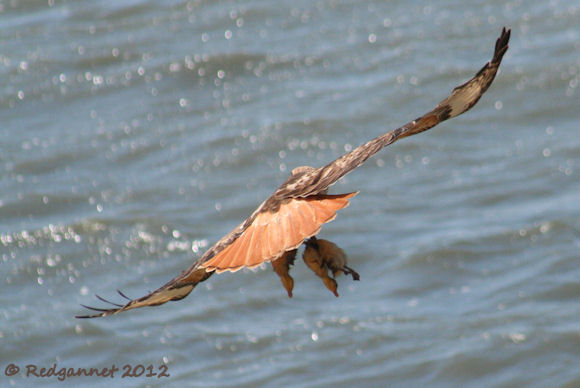
 A juvenile Red-tailed Hawk was very approachable and allowed me to get close enough to see what he had had for breakfast. An Anna’s Hummingbird was performing display flights, rising 20m into the air and power-diving, pulling up to form a clearly defined J-shape, then rising again to repeat the display three or four times.
  A still photo can’t convey the drama. I keep considering video but how much can I actually carry? In case you are wondering, this is not a picture from during the display. That was beyond me.
 of the water and Golden-crowned and White-crowned Sparrows in the scrub.
 Anticipating that she might give me a fly-by, I switched my lens stabiliser to panning mode and the camera to Servo AF to keep a moving object in focus. I was pleased with the result.
 A small mixed flock of House Finches, Western Bluebird and Yellow-rumped Warbler greeted me back at the car park.
  A pond there was hosting some Ring-billed Gulls with approximately 200 Bonaparte’s Gulls on the slough across the road.
 I thought it was a Glossy Ibis until a fellow camera-toting birder advised me to be on the lookout for a White-faced Ibis. The mistake was understandable I am sure you will agree. It was the red eye that swung it.
  Beyond the Interpretative Centre is a boardwalk that pushes out into the tidal marsh for about 400m or so. This is the favoured rail area and it has produced Virginia and Clapper Rail for this blogger in the past. The end of the boardwalk was obscured by fog until I tried to take an artistic photo, when the mist miraculously lifted.
  My theory was that the high tide would flood the marsh and push the rails up into view. For future reference the tide needs to be higher than today’s 2.5m to achieve that. There were plenty of Song Sparrows though.
 American Avocets were starting to attain their summer plumage. Short-billed Dowitchers were taking advantage of the delayed tide with a single Long-billed Curlew.
 A great Egret was preening.
 Also here were Greater Yellowlegs, Black-necked Stilts, American Coots and a small selection of duck. I took the path which led out between the slough and Adobe Creek. On the left was a viewing platform for the creek. Cinnamon Teal, a Double-crested Cormorant and a few Black-crowned Night-herons were all roosting among the tall reeds. On the other side, another platform looked up the length of Charleston Slough. A small island in front of it was providing roosting space for 3 Black Skimmers among the gulls, Marbled Godwits and the Willet.
  There were dowitchers too, but I couldn’t tell which one from that distance.
 Snowy Egrets were winkling mussels from the beds on the edge of the lake.
 A large flock of tiny peeps that I assumed to be Western Sandpipers flashed in the sun’s last rays of the evening.