Showing posts with label Pilanesberg. Show all posts

Sunday, 7 July 2013

Pilanesberg NP Part 1, Johannesberg, South Africa, June 2013

I am having trouble with Blogger and wonder if the original Pilanesberg post is too big. Is anyone else having trouble editing their posts so that the published post resembles the draft version? Anyway, I have cut it into two parts hoping that the text and photos can live together in harmony rather than trying to push each other off the page.

This is Part One.
Part Two can be found here and includes the bit about the Leopard and the baby Elephant.

“I adore Pilanesberg National Park”. There, I’ve said it.


This visit gave me even more to wax lyrical about. As if more than 500 square kilometres of acacia scrub, rocky, rolling hillsides, kopjes, dams and grassland, aren’t enough, today I broke my Leopard jinx and found my first Pilanesberg Panther. It was not the greatest leopard sighting ever, but I let out an involuntary whoop and perhaps just a bit of wee.


It was a great day all round with 6 separate Elephant sightings including a tiny week-old calf, very close encounters with White Rhinos and a glorious morning spent at the hide at Mankwe Dam.


I arrived at the park’s southern Bakubung Gate (Google Earth ref; 525 20 22.36S 27 3 48.50E), completed the formalities by 06.45 and headed straight up the main tarmac road that passes through the park and exits at the Bakgatla Gate in the northeast.

The light was still very low, but the sun just began to light the tops of the mountains as I stopped to look at the first dam on the left. Many Sacred Ibis had roosted here over night and were just beginning to stir. Yellow-billed Ducks and African Black Ducks made a quick circuit before skimming back onto the water. My first mammal of the day was a young Kudu.


I was surprised by how common the Grey Lourie (or Go-away-bird) was this visit. They seemed to be a constant presence and this one set the standard for a morning of very close approaches.


As I stopped to check my favourite kopje for leopards, a Glossy Starling dropped into the bush beside me and began gorging itself on the berries.


No leopards yet, but just around the corner were a pair of White Rhinos that taxed the minimum focus range of my camera. They were accompanied by a couple of Red-billed Oxpeckers and a Fork-tailed Drongo which will make a separate post for www.10000birds.com in the near future.


It was breath-taking to hear them chomping on the dry grass and snorting when a stiff stalk poked the sensitive membranes up a nostril.


I had turned off the main road and was headed down towards the hide on Mankwe Dam. A tiny Cardinal Woodpecker flushed from a roadside snag as a Steenbok watched from close by.


The hide was alive this morning. Three species of Kingfishers, African Snipe, Jacana and Three-banded Plover were seen before I even reached the entrance.
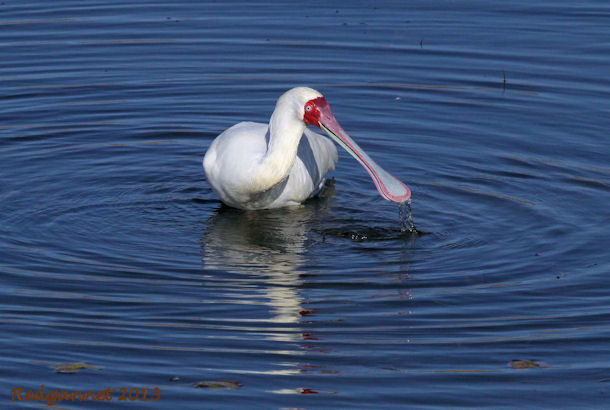

From inside the hide I was able to watch the African Spoonbill as it scythed through the water, the shallows allowed me to watch the African Darter going about its business underwater and the African Snipe had come closer in to make a better subject.


Where to put all the photos?


Did I mention the Kingfishers yet?


Malachite Kingfishers ambushed their prey from low perches amongst the reeds.


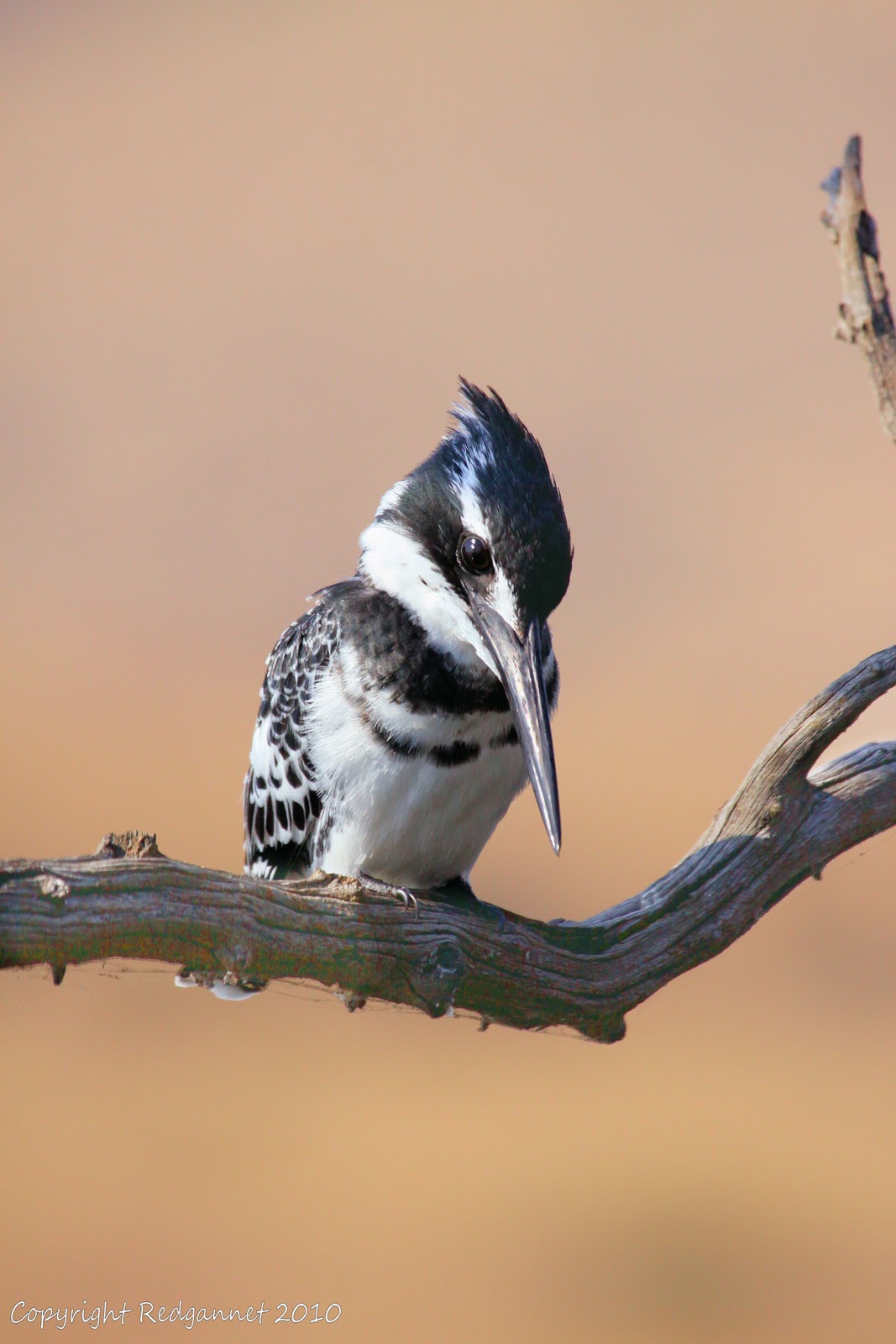
Pied Kingfishers hovered above their target, but rested on open snags until they spotted a potential meal.


There was so much going on that I was very reluctant to leave and barely made it to the car park before the Arrow-marked Babblers caught my attention.


Part Two can be found here and includes the bit about the Leopard and the baby Elephant. 


Birds seen; 78

Ostrich 1, White-faced Whistling Duck 4, Egyptian Goose 8, Spur-winged Goose 3, African Black Duck 5, Yellow-billed Duck 2, Helmeted Guineafowl 12, Crested Francolin 20, Natal Francolin 8, Little Grebe 25, White-breasted Cormorant 20, Long-tailed Cormorant 10, African Darter 4, Hamerkop 1, Grey Heron 3, Great Egret 1, Little Egret 1, Sacred Ibis 200, African Spoonbill 1, Osprey 1, African Fish-Eagle 3, Brown Snake-Eagle 1, Verreaux’s Eagle 3, Black Crake 2, Blacksmith Plover 10, Three-banded Plover 7, Black-winged Stilt 3, African Jacana 1, African Snipe 2, Red-eyed Dove 15, Ring-necked Dove 6, Laughing Dove 4, Grey Go-away-bird 35, African Palm-swift 2, Red-faced Mousebird 20, Malachite Kingfisher 2, Giant Kingfisher 1, Pied Kingfisher 7, Lilac-breasted Roller 2, Eurasian Hoopoe 1, Southern Yellow-billed Hornbill 2, Black-collared Hornbill 1, Cardinal Woodpecker 1, Crimson-breasted Gonolek 2, Fork-tailed Drongo 6, Pied Crow 5, Sabota Lark 5, Pearl-breasted Swallow 5, Common Bulbul 40, Rock-loving Cisticola 2, Tawny-flanked Prinia 2, Rufous-vented Warbler 4, Arrow-marked Babbler 7, Marico Flycatcher 7, Kalahari Scrub-robin 3, Red-backed Scrub-robin 3, White-throated Robin-chat 5, White-browed Robin-chat 3, Stonechat 2, Familiar Chat 2, Capped Wheatear 1, Groundscraper Thrush 1, Kurrichane Thrush 3, Common Myna 2, Cape Glossy Starling 15, Red-billed Oxpecker 8, Cape Wagtail 6, African Pied Wagtail 1, African Pipit 1, Golden-breasted Bunting 5, Yellow-fronted Canary 25, Cape Sparrow 15, African Petronia 1,  Southern Grey-headed Sparrow 4, Village Weaver 5, Common Waxbill 20, Blue-breasted Cordonbleu 6, Green-winged Pytilia 1.


Mammals seen;

African Elephant, White Rhinoceros, Leopard, Brindled Wildebeeste, Impala, Zebra, Steenbok, Giraffe, Hippopotamus, Springbok, Black-tipped Mongoose, Baboon, Warthog, Ground Squirrel, Dassie, Reedbuck, Waterbuck, Eland, Kudu, Mountain Reedbuck.


For previous posts from Pilanesberg, follow the links below;


Visit the dedicated Africa Page for more from South Africa, Including; Mount Sheba and Kruger NP.


Wednesday, 2 February 2011

Pilanesberg NP, Johannesberg, South Africa

The summer rains have brought green and growth to the African bush. the dams are full and the grass is as high as an elephant's thigh. With so much surface water available, the game animals are not tied to the permanent waterholes and can range freely to take advantage of the seasonal abundance.
Pilanesberg National Park, near Johannesberg in South Africa has about 500 square kilometers of free range for the animals to lose themselves in. The dry, African winter is usually considered the best time for animal viewing as the vegetation is sparse and the game is drawn to the waterholes, so sightings are usually more predictable and closer. Today, during the wet summer, the game was indeed spread out, but this meant that the viewers were thin on the ground too and I felt as the the whole park was mine alone. A Black-backed Jackal came out onto the road and ran along ahead of me for a hundred meters or so.
I was serenaded by the Ring-necked Dove, whose "drink lager" call is surely the most evocative of the sounds in the African bush. The day started slightly dull, but soon cleared up to become a beautifully bright morning. I took the main black-topped road from the southern gate at Bakubung and travelled north into the heart of the park. Close to the road was a very nice mixed herd of Zebra, Brindled Wildebeast and Impala, but the high grass and their heads down feeding attitude made photographs pointless. 
Luckily, the birds were still calling and displaying prominently. The Rufous-naped Lark has a very distinctive clear tri-syllabic whistle which came in through both open windows of the car and caused a delicious surround-sound effect. For good measure, in case whistling is not your thing, the lark also flaps its wings at great speed to cause a vibration for added effect. 
Other birds such as the Red-billed Ox-pecker found alternative perches to make themselves available for the camera.
The edges of the road were prolific for buntings. Cinnamon-breasted Buntings had a shorter flight distance than the Golden breasted Bunting, but neither of them would allow me close enough to get a picture other than through the windscreen. Only a Brown-crowned Tchagra, which I surprised around a corner, froze for a moment before retreating back into the scrub.
The Pilanesberg Centre was very quiet with no sightings pinned up on their map. Usually, successful safariers (can there be such a word?) help out others by indicating with coloured pins on a map where the prime mammal species have been spotted, but nothing today. I pinned up the Elephant, but doubted if it would be much help as he was moving on and would be miles away by now.
Helmeted Guineafowl are always around by the centre and this one posed in the car park.
Everything slows down after breakfast. The mammals head for the shade and the birds are less obvious. At times like this, a chap's mind turns to odonata. Dragonflies are cold-blooded and need a little time and warmth to start their day.They had had plenty of both by now and I found some by a puddle near the big Mankwe Dam.
The Banded Groundlings, Brachythemis leucosticta (male top, female below) were especially abundant and now that the temperature was getting high, they were visible by every patch of surface water. The name was well chosen for a species that was not seen perched anywhere but on the ground.
A vivid green bird was feeding its well-grown chick in an acacia bush close to the road. When I got my Bushnells up, I realised that they were Dideric Cuckoos and it was a male offering a piece of food to the female as a prelude to mating. The male has a bright red eye-ring which the female lacks.
The wet season in South Africa is characterised with violent storms and quick showers. Between the rain, the sky often clears up again leaving a beautiful, if humid, afternoon. The birds that feed from prominent perches were still hoping to catch a late lunch, but the rain dampened their chances for a while.
At one point, I felt that I had entered the Eurozone. Within a very short distance, I encountered the European Bee-eater, the Eurasian Swallow and as the sun came back out, a European Roller.
I had moved from the scub onto the grasslands now. Pilanesberg is blessed to have many habitats from rock-strewn mountain-side to large permanent water, acacia scrub and grassland. The park is managed and controlled burns are instigated if natural fires don't clear some of the long-grass meadows. A large shape caught my eye, it was a White Rhino. The animal's head was down, and the long grass hid much of it, but rhino 'tocks are unmistakeable. As a double with only my second 'big five' of the day was a Kori Bustard,  the world's largest flying bird!
I made a big circle from Manyane gate around Dithabaneng to check on the elephant carcass that I had seen on my last visit. Only a few of the large bones were left visible and they were strewn over a wide area.
Shortly before Dithabaneng meets the junction of the main north/south road, I saw a herd of Elephants off to the left. they seemed to be moving quite deliberately along and I suspected that they would come out onto the main road shortly. I waited in ambush for a while and although I didn't see the Elephants again, a Black Rhinoceros showed briefly in the scrub.
I found some more dragonflies while I was waiting. The Jaunty Dropwing, Trithema sticta was equally at home on the ground and easily seen around the puddles along the road.
The other ode is one of the Orthetrum family, a tricky bunch to identify specifically. I have narrowed this one down to two possibilities, but am taking advice before committing myself. Look again later and hopefully I will have an ID for it.
There is a big hide on the main Mankwe Dam which  visited shortly before having to head for the gates to be out by dusk. Here the weavers were out in force again with a Red Bishop sitting up for the best shot of this species this week.
A pair of Water Dikkop or Thick-knee were down by the water at the Hippo viewing point, although on this occasion, there were no Hippos to be viewed.
I calculated that I had time to drive to Kwa Maritane Gate to exit the park, but half way there, the road was blocked and impassable. I had to turn round and make a dash for Bakubung Gate again, which left me rushed and with very little time to stop. At last a Golden-breasted Bunting sat up to have its picture taken and I resigned myself to being late.

Bird species; 88

Little Grebe 2, White-breasted Cormorant 8, Long-tailed Cormorant 2, African Darter 2, Grey Heron 1, Intermediate Egret 1, Cattle Egret 2, Hamerkop 1, Marabou Stork 53, Hadada Ibis 8, White-faced Whistling-duck 4, Egyptian Goose 18, Yellow-billed Duck 4, African Fish Eagle 2, Steppe Buzzard 1, Amur Falcon 1, Cape Francolin 6, Swainson’s Francolin 15, Helmeted Guineafowl 12, Kori Bustard 1, Water Thick-knee 2, Blacksmith Lapwing 20, Crowned Lapwing 5, Wattled Lapwing 4, Common Sandpiper 1, Speckled Pigeon 6, Ring-necked Dove 40, Laughing Dove 30, Grey Go-away-bird 12, Dideric Cuckoo 5, Speckled Mousebird 1, Red-faced Mousebird 6, Malachite Kingfisher 1, Pied Kingfisher 6, European Roller 4, Lilac-breasted Roller 1, African Grey Hornbill 3, Yellow-billed Hornbill 4, Crested Barbet 1, Black-collared Barbet 1, Rufous-naped Lark 30, European Swallow 30, Pearl-breasted Swallow 1, Greater Striped Swallow 8, Lesser Striped Swallow 15, Rufous-chested Swallow 9, Grassveld Pipit 2, Cape Wagtail 4, Common Bulbul 12, Groundscraper Thrush 2, White-browed Robin-chat 8, Kalahari Scrub Robin 2, Familiar Chat 4, Rattling Cisticola 15, Zitting Cisticola 4, Black-chested Prinia 3, Cape Crombec 4, Spotted Flycatcher 4, Arrow-marked Babbler 4, Cape White-eye 2, Red-backed Shrike 20, Lesser Grey Shrike 15, Common Fiscal 2, Magpie Shrike 5, Brown-crowned Tchagra 3, Fork-tailed Drongo 2, Pied Crow 2, Common Myna 2, Cape Glossy Starling 12, Red-winged Starling 3, Red-billed Ox-pecker 8, House Sparrow 10, Mossie 15, Southern Grey-headed Sparrow 1, Scaly Weaver 3, Southern Masked Weaver 80, Yellow-crowned Bishop 6, Red Bishop 15, White-winged Widowbird 2, Red-collared Widowbird 1, Village Indigobird 1, Pin-tailed Whydah 6, Black-throated Canary 10, Yellow-fronted Canary 1, Cinnamon-breasted Bunting 25, Golden-breasted Bunting 8.


Impala

Mammal species; 14

African Elephant 30, White Rhinoceros 7, Black Rhinoceros 1, Zebra 60, Brindled Wildebeast 200, Impala 400, Hippo 2, Red Hartebeast 6, Tsesebe 4, Eland, 15, Black-backed Jackal 1, Springbok 120, Southern Giraffe 18, Warthog 12.

Look for other posts for Pilanesberg and South Africa and the rest of the Dark Continent on the dedicated Africa page
 http://redgannet.blogspot.com/p/africa.html

Saturday, 4 September 2010

Pilanesberg, Johannesburg, JNB, South Africa

I had company with me this morning in the shape of my colleague, HG. We had come to Pilanesberg NP and arrived just before 07.00.
Immediately inside the gate we came across a small herd of Brindled Wildebeest, closely followed by our first B5 animals of the day.
A group of White Rhinoceros, made up with a mature female, two immatures and a small calf, were grazing right beside the road. The smallest calf was jealously guarding his mother and his milk supply. We surmised that the two immatures may have been his big sisters and that sibling rivalry was the cause of the calf’s boisterous behaviour. He was butting his big sister, who was being very indulgent and gently playing along.
Just beyond them, a lark took off from a raodside snag as we passed. The clapping sound it made as it flew left me with only one choice, an Eastern Clapper Lark. I would have loved to get a better look at a red crayon bird, but I am happy with the ID.
We followed the main road through the park, heading north from Bakubung Gate and soon found two young male giraffe vying for dominance over each other. They were swiping at each other, swinging their necks and trying to hit their opponent with their head. This was not a full-blooded fight for mating rights; these males were still fairly young. They were trying to establish their place in the pecking order for the future.
The expected animals were plentiful today. There were herds of Impala and Wildebeest with an occasional Hartebeest added in for good measure.
Birds were well represented (this is supposed to be a bird blog after all). Lesser Striped Swallows were slow to move from their roost this morning, which gave me a good opportunity. Actually, this picture may have been taken by H, who had a better angle from the passenger seat.
We headed for the hide at Mankwe Dam and spent a while there enjoying the Pied Kingfishers and a herd of Wildebeest that came down to drink.
The birds on the approach and around the car park were very confiding with a White-browed Scrub-Robin posing beautifully on a post and Natal Francolin calmly walking round the car.
We had noticed a few cars that had stopped on the other side of the dam and went to investigate. They were watching some Hippo that had hauled up and were huddled together in a big brown blob on the bank.
Another cluster of cars gave away the presence of six more White Rhino, while just a little further up the road towards Manyane, a waterhole held good numbers of Wildebeest and some Zebra. 
I wanted to try to find a different approach to taking Zebra pictures, but when three lined up at the water, I was willing a fourth to fill in the gap, which it obligingly did.
As we headed towards the Pilanesberg Centre for breakfast, we noticed a few Safari tour vehicles all heading in the same direction. This is usually a good sign that something interesting is going on. Thus we postponed breakfast and followed. Sure enough a herd of elephant were feeding at the roadside on the way to Mankorwe Dam. The matriarch seemed very calm and patient with the other vehicles, so we were able to make a very close approach. She had a small calf with her which seemed quite at home with the attention it was getting.
The Pilanesberg Centre was quiet for our late breakfast, but the view from the deck was as busy as I have ever seen it.
Wildebeest, Zebra, Impala and Giraffe were joined by Springbok and Black-faced Vervet Monkeys as we ate.The birds here were perfect models as they posed on a post in front of the veranda.
A Fork-tailed Drongo was keen to show off his elegant black plumage set off by his dramatic red eye, but was closely challenged by a Southern Masked Weaver, which preferred to complement his eye with a yellow outfit.  
Unable to compete with such stylish competition, the Common Bulbul resorted to a coquettish posture to attract attention.
Breakfast was good and we were reluctant to leave, but grapevine reports held news of lions along Dithabaneng.
As we neared Maletse Dam, a fine male Common Waterbuck showed on the rocky slopes to the south. H had dozed off in the back of the car and could not get enthused until we came across the lion hunkered down amongst the rocks, watching a group of Zebra. He stalked slowly towards them, but any action was likely to take place over the rise in front of him. We pulled forward to a point where we could see the Zebra, but not the lion. Here we waited for about 40 minutes before realising that the lion had lost interest and gone for a snooze in the shade. There were rumours of a kill closeby and the lions looked well fed. This may explain why Black-backed Jackals were hanging about.
I pulled back to the dam where some hippos were sunbathing on the far bank. About 30 meters to the left was an elephant carcass, on top of which sat an African White Ibis. We returned to this spot a short while later to watch 2 bull elephants as they came across the body.
Their reactions and behaviour was very touching and it is easy to see how they can be credited with emotions such as sadness and loss, that we humans usually use as a yardstick to separate ourselves from the animals.
As other vehicles arrived we pulled away to avoid the crush. We returned to the lion 200meters along the road. It was buried deep in the bushes and was hard to find. Once we had found it, I noticed a second lion alongside it.
H put forward a thought that when lions yawn, it is a sign that they are about to move. This was not something that I was aware of, but as we watched, one of the lions yawned, then stood up and began making his way towards us. I hoped that it was headed for the water, so I reversed the car to give it the opportunity to cross in front of us. Instead, it continued along the road and must have caused a few heart-stopping moments as it passed between the cars that had stopped to look at the elephants.
It skirted around the western end of the dam. After a brief confrontation with one of the elephants, it began feeding on the elephant carcass.
Unbeknown to most of the other cars in the watching scrum, a second young male lion was approaching from behind them and went to join his brother but did not feed. I did some searching on the internet and found that the carcass had been there since at least 29th June, nearly 2 months before.
A more detailed description of the above incident is written up on the previous post. Follow the link; http://redgannet.blogspot.com/2010/08/do-elephants-grieve.html
The journey out of the park could not live up to the excitement that we had already experienced through the day, but H managed to get this picture of a Warthog doing his "Best in Show" pose.

Bird species 61;

Little Grebe 6, White-breasted Cormorant 6,Long-tailed Cormorants 15, African Darter 3, Grey heron 2, Great Egret 1, Little Egret 1, Striated Heron 2, Sacred Ibis 1, Hadada Ibis 1, African Spoonbill 12, Egyptian Goose 5, Black-shouldered Kite 3, African Fish Eagle 1, Black-breasted Snake Eagle 1, Crested Francolin 5, Natal Francolin 15, Swainson’s Francolin 8, Helmeted Guineafowl 40, Blacksmith Lapwing 5, Crowned Lapwing 6, Caspian Tern 1, Speckled Pigeon 6, Red-eyed Dove 5, Ring-necked Dove 12, Laughing Dove 10, Grey Lourie 4, Burchell’s Coucal 1, African Palm Swift 10, Red-faced Mousebird 4, Brown-headed Kingfisher 2, Malachite Kingfisher 2, Pied Kingfisher 15, Southern Yellow-billed Hornbill 1, Crested Barbet 1, Black-collared Barbet 2,Rufous-naped Lark 1, Namaqua Clapper Lark 1, Pearl-breasted Swallow 1, Lesser-striped Swallow 25, Cape Wagtail 3, Common Bulbul 35, Olive Thrush 1, Groundscraper Thrush 1, Mocking Cliff-chat 1, White-throated Robin-chat 1, White-browed Scrub-robin 4, Familiar Chat 4, Capped Wheatear 5, Tawny-flanked Prinia 2, Mariqua Flycatcher 15, Chinspot Batis 1, Arrow-marked Babbler 4, Southern Boubou 1, Crimson-breasted Gonolek 3, Fork-tailed Drongo 20,Pied Crow 20, Cape Glossy Starling 10, Red-billed Ox-pecker 3, Southern Masked Weaver 6, Yellow-fronted Canary.

Mammal species; 19

Vervet Monkey 6, Baboon 35, Scrub Hare 1, Black-backed Jackal 3, Lion 2, Elephant 11, Zebra 100, White Rhinoceros 13, Warthog 12, Hippopotamus 18, Giraffe 30, Bushbuck 2, Greater Kudu 15, Waterbuck 20, Red Hartebeest 6, Gnu 800, Impala 250, Steenbuck 6, Springbuck 100.

Pilanesberg, Johannesberg, JNB, South Africa


For other Pilanesberg posts on Redgannet try the following;
http://redgannet.blogspot.com/2010/08/do-elephants-grieve.html
http://redgannet.blogspot.com/2009/06/delicious-dilemma.html (Marievale, Pilanesberg NP and Rietvlei Nature Reserve)

For more posts from Johannesburg,try these links;
http://redgannet.blogspot.com/2010/08/moreletakloof-johannesburg-jnb.html (Moraletakloof)
http://redgannet.blogspot.com/2010/08/tswaing-crater-johannesburg-jnb-south.html (Tswaing Crater)
http://redgannet.blogspot.com/2010/03/zaagkuildrift-road-jnb-south-africa.html (Zaggkuildrift Road)
http://redgannet.blogspot.com/2009/10/more-time-i-have-faster-it-goes.html ( Marievale, Dulstroom, Mount Sheba and Kruger NP)

There are other posts from South Africa here;
http://redgannet.blogspot.com/2010/01/cape-town-specials.html (Cape Town, Heldeberg, Paarl, Sir Lowry's Pass and Betty's Bay)

Other posts from the great continent of Africa;
http://redgannet.blogspot.com/2010/04/to-pish-or-not-to-pish-dire-warnings.html (Lekki Conservation centre, Lagos, Nigeria)
http://redgannet.blogspot.com/2010/05/sheraton-hotel-lagos.html (Lagos, Nigeria)
http://redgannet.blogspot.com/2010/05/millenium-park-abuja-nigeria.html (Millenium Park, Abuja, Nigeria)
http://redgannet.blogspot.com/2009/03/my-trip-this-weekend-is-scheduled-to-be.html (Nigeria)
http://redgannet.blogspot.com/2010/01/even-bad-days-are-good.html (Achimota Forest, Labadi Beach, and Aburi Botanical Gardens, Accra, Ghana)

Dragonfly posts are available at;
http://redgannetsdragonflies.blogspot.com/2010/01/cape-town-south-africa.html (Cape Town)
http://redgannetsdragonflies.blogspot.com/2010/01/i-have-been-languishing-in-temperate.html (Accra, Ghana)
Bird species 61;

Little Grebe 6, White-breasted Cormorant 6,Long-tailed Cormorants 15, African Darter 3, Grey heron 2, Great Egret 1, Little Egret 1, Striated Heron 2, Sacred Ibis 1, Hadada Ibis 1, African Spoonbill 12, Egyptian Goose 5, Black-shouldered Kite 3, African Fish Eagle 1, Black-breasted Snake Eagle 1, Crested Francolin 5, Natal Francolin 15, Swainson’s Francolin 8, Helmeted Guineafowl 40, Blacksmith Lapwing 5, Crowned Lapwing 6, Caspian Tern 1, Speckled Pigeon 6, Red-eyed Dove 5, Ring-necked Dove 12, Laughing Dove 10, Grey Lourie 4, Burchell’s Coucal 1, African Palm Swift 10, Red-faced Mousebird 4, Brown-headed Kingfisher 2, Malachite Kingfisher 2, Pied Kingfisher 15, Southern Yellow-billed Hornbill 1, Crested Barbet 1, Black-collared Barbet 2,Rufous-naped Lark 1, Namaqua Clapper Lark 1, Pearl-breasted Swallow 1, Lesser-striped Swallow 25, Cape Wagtail 3, Common Bulbul 35, Olive Thrush 1, Groundscraper Thrush 1, Mocking Cliff-chat 1, White-throated Robin-chat 1, White-browed Scrub-robin 4, Familiar Chat 4, Capped Wheatear 5, Tawny-flanked Prinia 2, Mariqua Flycatcher 15, Chinspot Batis 1, Arrow-marked Babbler 4, Southern Boubou 1, Crimson-breasted Gonolek 3, Fork-tailed Drongo 20,Pied Crow 20, Cape Glossy Starling 10, Red-billed Ox-pecker 3, Southern Masked Weaver 6, Yellow-fronted Canary.

Mammal species; 19

Vervet Monkey 6, Baboon 35, Scrub Hare 1, Black-backed Jackal 3, Lion 2, Elephant 11, Zebra 100, White Rhinoceros 13, Warthog 12, Hippopotamus 18, Giraffe 30, Bushbuck 2, Greater Kudu 15, Waterbuck 20, Red Hartebeest 6, Gnu 800, Impala 250, Steenbuck 6, Springbuck 100.

Pilanesberg, Johannesberg, JNB, South Africa