Monday, 12 November 2012

Ibirapure Park, Sao Paulo, November 2012

Late arrival, traffic and an unfamiliar hotel conspired to make me late this morning, so I tried an odd tack and had a nap instead. Mid-afternoon, I caught a bus down Brigadiero Luis Antonio St. to Ibirapuera Park.


As ever, Rufous Hornero, Rufous-bellied Thrush and Sayaca Tanager vied to be first on the list and had all been included before I even arrived at the gate. Blue-and-white Swallows flew over the lake by the pedestrian entrance near the Monumento as Bandieras (Google Earth ref; 23°34'50.09"S 46°39'40.17"W), but I was not able to adequately identify the swifts.

 
Great Kiskadees hawked from the bushes and trees overlooking the water, anxious to keep young bellies well fed.


A small flock of Maroon-bellied Parakeets fed in the bushes as I crossed the small bridge at the bottom of the lake. On the bank of the second lake, a flock of Black Vultures were resting, but their peace was being shattered by a pair of very irritable Southern Lapwings who were screaming and dive-bombing the vultures.


I went to see what the fuss was about and found two enchanting, leggy chicks. The vultures had moved on at my approach. Strangely, the lapwings calmed down and appeared to have no qualms about my presence, even allowing one of the chicks to approach within two meters.


The coral trees were in leaf, but had no flowers. Subsequently, the usual numbers of Bananaquits, Swallow-tailed Hummingbirds and Plain Parakeet were much lower than usual, but a couple of each were seen as I approached the metal bridge. From high above the water, I was able to scan along the line of trees, but could only find Picazuro Pigeons today. Further on I found a hot-spot on the southern stretch of bank on the upper lobe of the second lake. Cattle Tyrants were chasing around through the wispy grass looking for insects while a young Chalk-browed Mockingbird waited on a palm frond for his dinner to be shipped in.


My red-letter bird of the day came in the shape of two Narrow-billed Woodcreepers chasing each other around in the branches. It was difficult to know if they were two competing males or whether all the activity was part of a courtship.


The lower lobe of the lake was rather quiet and unproductive today. Feral cats were out in force by the fenced off section of bank and only an Eared Dove and a Tropical Flycatcher were added to the list from this area. Mind you, the common birds were still being seen with Rufous-bellied Thrush, Rufous Hornero and Sayaca Tanager still easy to find.


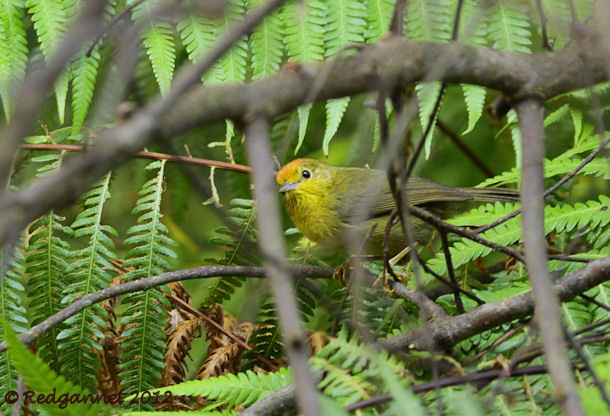
I crossed the metal bridge again and headed straight on through the buildings. A small, yellow flycatcher caught my eye and I had to take a good look and check through the field guide to identify a brood of Rusty-margined Flycatchers calling for their parents. Rufous-collared Sparrows and Shiny Cowbirds were seen around the buildings


The small bridge (at Google Earth Ref; 23°34'59.82"S  46°39'41.50"W) that separates the two lakes proved to be the hot-spot of the day with more than 23 of the 30 birds seen on this visit found within 50 meters of the bridge. On the second pass, another Narrow-billed Woodcreeper was seen. Rufous-browed Peppershrike were here and an Amazon Kingfisher was almost photographed.

 Birds seen; 30

Pied-billed Grebe 1, Neotropic Cormorant 60, Great Egret 3, Snowy Egret 1, Striated Heron 2, Black Vulture 50, Common Gallinule 6, Southern Lapwing 4, Picazuro Pigeon 10, Eared Dove 1, Maroon-bellied Parakeet 2, Plain Parakeet 10, Swallow-tailed Hummingbird 3, Sapphire-spangled Emerald 1, Amazon Kingfisher 2, Rufous Hornero 20, Narrow-billed Woodcreeper 3, Cattle Tyrant 2, Great Kiskadee 15, Rusty-margined Flycatcher 5, Tropical Kingbird 2, Rufous-browed Peppershrike 2, Blue-and-white Swallow 20, House Wren 2, Rufous-bellied Thrush 50, Chalk-browed Mockingbird 5, Bananaquit 3,  Sayaca Tanager 25, Rufous-collared Sparrow 1, Shiny Cowbird 8.

For a previous post from Ibirapuera Park and Sao Paulo, follow the link below;
http://redgannet.blogspot.co.uk/2009/08/sao-paulo-august-2009.html

Visit the dedicated Central and South America Page for other posts from Sao Paulo including Sao Paulo Botanical Gardens and Cantareira Forest.
 

Please be very aware of personal security while walking alone. Regular security patrols offer some comfort and give the park a safe feel, but pedestrian entrances are not guarded, allowing free access to all. Taxis take about 5 – 10 minutes from Ave Paulista and are reasonable priced. Taxis will probably stop at the security gate at Google ref; 23°34'59.57"S 46°39'27.47"W unless requested otherwise. It may be possible to find a taxi here for the return, but it is not an official rank.

Saturday, 10 November 2012

A little fill in post from Brazil

I have been neglecting the blog for a week or so, but I am just back from Sao Paulo, Brazil with lots of pictures and at least a couple of lifers to write in red.

 
Please enjoy these Capybaras from Parque Ecologica do Tiete until I get a chance to sort through the pictures and write a proper post.


Despite having what looked like a large bullet wound in his side, this male was still very interested in the mud (?) covered female.

 In case you can't wait, there is a previous post from Parque Ecologica do Tiete at this link.

The associated posts are now ready and can be seen at the links below;


Tuesday, 30 October 2012

Tai Po Kau, Hong Kong, Oct 2012

As so often happens, the main excitement at Tai Po Kau came in the lay-by at the entrance to the reserve. As soon as I crossed the road from where green minibus 28K dropped me, birds began to show. Scarlet Minivets are my favourite bird here and were the first to be seen in small numbers. They were part of a feeding group that spent about 20 minutes in the trees at the north-west end of the lay-by.


Accompanying them were the usual suspects including Japanese White-eye, Great Tit, Yellow-browed Warbler and Velvet-fronted Nuthatch. The nuthatch is one of the denizens of Tai Po Kau that have made a home there after escaping from captivity.

 
Depending on how neurotic, beg your pardon, diligent, you are about your life list, it is well worth checking the field guide to confirm status of many of the Tai Po Kau songbirds. Other species that have established a population from originally captive stock include Blue-winged Minla, Silver-eared Mesia and Rufous-capped Babbler.
 

Thirteen of the visit’s twenty birds were seen at the lay-by before even starting up the hill, including this morning’s life bird, a Black-winged Cuckoo-shrike.


Up and into the forest I went. The coral trees have showy red flowers that attract many varieties of bird, but at this time of year they are in leaf rather than flower.


Paris Peacock Papilio paris
In the garden at the Outdoor Education Centre (Google Earth ref; 22°25'48.05"N 114°10'51.51"E), were butterflies and some dragonflies in the small pool.
 
 
Lesser Blue Skimmer Orthetrum triangulare
 
 
Red-faced Skimmer Orthetrum Chrysis 

Following the road around gives access onto the path system. I suspect that there may be an aviary or exotic collection in one of the private houses there as many unlikely calls emanated from beyond a fence.

 
As usual, I chose the Red Route which describes a 3 km loop through the forest. A few steps and slightly rough stretches of path exist, but for the most part, the route is easy to walk and well maintained.
 

Very few birds were seen for the large part of the walk, with a consistent call frustrating me. As I came full circle, the path crosses the stream and a Common Blue Jewel, Rhynocypha perforata, damselfly caught my eye. A few males were jousting above the stream’s surface while females waited provocatively.
 

Birds seen; 20

Black Kite 1, Spotted Dove 6, Black-winged Cuckoo-shrike 2, Scarlet Minivet 8, Grey -chinned Minivet 2, Great Tit 15, Yellow-cheeked Tit 1, Velvet-fronted Nuthatch 3, Red-whiskered Bulbul 15, Light-vented Bulbul 6, Chestnut Bulbul 2, Yellow-browed Warbler 3, Japanese White-eye 20, Silver-eared Mesia 2, Blue-winged Minla 10, Rufous-capped Babbler 3, Oriental Magpie Robin 3, Scarlet-backed Flower-pecker 2, Fork-tailed Sunbird 3, Gray Wagtail 1

Buses 102 and 106 leave from just outside the World Trade Centre on Hong Kong Island (starting just after 06.00. For a really early start try N170 from the same stop, or the 24 hour bus N122 which runs every 15 mins from the first bus stop on Hennessey Road, opposite Sogo). They run through the tunnel to Hung Hom Station and a chap could be on an East Line (formerly known as the KCR, Kowloon Canton Railway) train heading to China in moments. Using the subway system would involve 3 changes of train to achieve the same result. Returning to the island, the buses run from the first stair off the footbridge out of Hung Hom Station.

Tai Po Market Station is on the East Line. Taxis are easily available from the station and cost $HK25 (@ $HK12 = £1) at the time of writing. Green minibus 28k runs up the hill from the railway station and stops close to the lay-by. Ask the driver for Tai Po Kau (pronounced How). There is usually a steady flow of taxis past the lay-by for return, unless it is raining.

The East Line connects to the rest of Hong Kong’s transport system at Hung Hom or Kowloon Tong.

Previous posts from Tai Po Kau can be found at the links below;
http://redgannet.blogspot.co.uk/2010/12/hong-kong-twitching-pt-1-tai-po-kau.html
http://redgannet.blogspot.co.uk/2012/03/tai-po-kau-hong-kong-march-2012.html

Visit the dedicated Asia Page for more from Hong Kong, including; Sha Lo Tung and Long Valley.

Sunday, 28 October 2012

Mai Po, Hong Kong, Oct 2012

The Hong Kong chapter of the WWF (that’s the World Wildlife Fund, not the World Wrestling Federation), have joined the Hong Kong Transport System in baiting Redgannet to see if he would crack. My permit application had not been received and entry was denied. It might have been possible to get a permit at the gate, but I had not brought my passport. For future reference, a passport is essential, even with a pre-approved permit.
 
 
Though…..the young lady at reception hesitated to suggest it, but I might be able to join a group tour, only it would be conducted in Mandarin. It turned out that the beautiful leader, Apple, had a good turn of English and I signed up to walk with Mr Li, his wife and his mother.


Mrs Li Senior, despite using a pair of pink plastic binoculars pulled the first bird out of the bag with a red-letter Oriental Stork. It was seen beyond the multi-storey hide at gei wai 11(?). Unfortunately, I had come straight from Long Valley and my focussing problem was still bothering me. You should not have to be exposed to pictures like this, but a lifer is a lifer and let’s be honest, you must be used to it by now.
 

We were on a timer and headed straight out towards the mangrove boardwalk. A flycatcher along the way had us vascillating between Asian and Japanese Paradise Flycatcher. In the end, the darker back pushed me towards the Japanese form. It was now that it suddenly occurred to me that I had just bought a new UV filter for my lens. This proved to be the cause of the focussing problem.
 

From the mangrove hide, the water was hundreds of meters away, but a Little Egret, a few Marsh Sandpipers and Common Redshanks fed in the shallow water of a small inlet to the north. Way out, hundreds of Great Cormorants were waiting for some depth to return to the bay while a few Common Greenshanks stalked Mudskippers on the flats.
 

There were plenty of distant Lesser Sand Plovers. A few, noticeably larger, were Greater Sand Plovers.
Common Kingfishers were seen a few times as well as a couple of White-throated Kingfishers and a single Black-capped Kingfisher.
 
 
The tide was due to reach its height at 16.30, but we had to leave slightly before this to get back to the centre and end our tour before dark. The tide was still a very long way off. At only 1.6 – 1.8 meters, it was never likely to push the birds as far as the hides. Mr Li had scoped a Black-faced Spoonbill and I had become ridiculously excited by a young rail-like Eurasian Moorhen, but we had to leave.


A pair of Ospreys made a flypast as we walked back along the control fence. This is the fence that restricts passage to or from the mangroves and Deep Bay. It is a throwback to pre-1997 when Hong Kong was governed by the British, but it is still scrupulously maintained.
 

Birds seen; 43

Little Grebe 6, Oriental Stork 1, Great Cormorant 500, Grey Heron 30, Great Egret 20, Little Egret 25, Chinese Pond-heron 12, Black-crowned Night-heron 20, Black-faced Spoonbill 1, Osprey 3, Eastern Marsh Harrier 1, Spotted Eagle 1, White-breasted Waterhen 4, Eurasian Moorhen 3, Lesser Sand-plover 150, Greater Sand-plover 4, Little Ringed Plover 1, Black-winged Stilt 1, Common Sandpiper 4, Common Greenshank 10, Marsh Sandpiper 8, Wood Sandpiper 3, Common Redshank 15, Eurasian Curlew 3, Spotted Dove 40, Asian Koel 2, Greater Coucal 3, Common Kingfisher 3, White-throated Kingfisher 2, Black-capped Kingfisher 1, Long-tailed Shrike 4, Japanese Paradise Flycatcher, Eurasian Magpie 2, Collared Crow 1, Barn Swallow 6, Light-vented Bulbul 80, Japanese White-eye 6, Masked Laughingthrush 3, Oriental Magpie Robin 4, Black-collared Starling 6, White Wagtail 1, Eurasian Tree Sparrow 6, Nutmeg Mannikin 8.
 
Mr Li very kindly sent me one of his pictures of the Oriental Stork to make up for my fuzzy one.
 

For more posts from Mai Po, follow the links below;
http://redgannet.blogspot.com/2010/05/mai-po-hong-kong-hkg.html
http://redgannet.blogspot.com/2009/06/weather-predictions-for-hong-kong-this.html
http://redgannet.blogspot.com/2011/05/hong-kong-hangover-mai-po.html
http://redgannet.blogspot.co.uk/2012/03/mai-po-hong-kong-march-2012.html

Visit the dedicated Asia Page for more from Hong Kong, including; Tai Mo Shan and Victoria Peak.

Saturday, 27 October 2012

Long Valley, Hong Kong, Oct 2012

It seemed as though the Hong Kong Transport System was toying with me this morning and I would swear that I spent more time waiting for buses than bird watching. It was already light when I arrived at Yin Kong and the ladies were busy tending their crops, seemingly too busy to point and laugh as is their custom.

 
The approach to the lettuce fields had already brought Red-whiskered Bulbul, Nutmeg Mannikin and an Asian Koel which was strangely subdued this morning. The camera was playing up again and struggling to gain focus. Even using the Live View function with the 10x magnification focussing facility, the pictures were soft and fuzzy. A Light-vented Bulbul, greeting the dawn with a lusty song, looked great in the Bushnells, but proved to be a big disappointment through the Canon.
 

Motacillas were abundant this morning with (White-faced) White Wagtails being the most numerous. I would usually have photographed the pipits for later perusal, but the indistinct supraloral stripe and a relict shade of red on one of them made the identification of the Red-throated Pipit straightforward.
 

It would not help to describe a route through the agricultural plots of Long Valley.
The bunds are higgledy, the paths are piggledy and it is quite easy to lose one’s sense of direction (the area is only small and surrounded by either river or exit, so the chances of actually getting lost are minimal). A large expanse of tall grass had been cut since my last visit and the boggy result was seething with birds. Little Egrets, Chinese Pond-herons and Wood Sandpipers were all greatly outnumbered by wagtails in various plumages. Dusky Warblers "Tchacked" their way through what was left of the standing vegetation at the top end.

 
I hesitate to use the word flock for a group of Oriental Skylarks, as I have never seen them grouped together before. Larks are often referred to as an exaltation, but these birds were sitting quietly on a dry patch in the middle of a boggy mess, not really living up to the billing. The collective term, ‘slump’ came to mind.
 

A Common Snipe was big enough in the frame for the focussing problem to be not too apparent, but the Common Kingfisher felt like a missed opportunity.
 

Deep into the fields is a chain-link fence bordering a couple of fallow ponds.Growth here has overgrown the fence and provided an effective hedge which gave cover to a young Slaty-breasted (Banded) Rail. It lurked in and out of cover, coming out into the open and I was cursing my inability to focus at less than 10 meters.
 

An Oriental Greenfinch stopped by. It was only later that I realised that it might provoke an eBird email, but it would not have made a good picture today. The yellow windows in the wings were clear to see as it flew and the green body with a grey head were enough for me to be sure.

 
I did manage to fix my camera later, by removing the UV filter. It was new and supposedly a genuine Hoya filter, but I have grave doubts about that now. As soon as the filter was removed, focus became sharp again. If only I had thought of it earlier!
 
Birds seen; 37
Little Egret 6, Chinese Pond-heron 15, Slaty-breasted Rail 1, White-breasted Waterhen 4, Little Ringed Plover 3, Black-winged Stilt 22, Common Sandpiper 1, Wood Sandpiper 12, Common Snipe 30, Greater Painted-Snipe 3, Spotted Dove 25, Asian Koel 1, Common Kingfisher 1, Long-tailed Shrike 3, Collared Crow 2, Skylark 1, Oriental Skylark 5, Barn Swallow 6, Red-whiskered Bulbul 8, Light-vented Bulbul 35, Sooty-headed Bulbul 5, Dusky Warbler 20, Common Tailorbird 2, Yellow-bellied Prinia 1, Plain Prinia 1, Japanese White-eye 10, Oriental Magpie Robin 5, Stonechat 12, Crested Myna 40, Western Yellow Wagtail 25, White Wagtail 50, Red-throated Pipit 6, Black-faced Bunting 3, Oriental Greenfinch 1, Eurasian Tree Sparrow 30, White-rumped Munia 20, Nutmeg Mannikin 40.
 
 
To reach Long Valley at Yin Kong, Take Bus 76K from Sheung Shui Rail Station on the East Line. Ask the bus driver for Yin Kong, on Castle Peak Road (Google Earth ref; 22°30'17.11"N 114° 6'39.78"E). If the bus stops immediately after a right turn, you have passed the entrance to the lettuce fields. Retrace your steps for about 400m. If the bus tries to drop you on the edge of a motorway, you are about 200m short of the turn. To access the East Line via the MRT from Hong Kong Island can be a bit convoluted.  Bus N170 runs all night from outside the World Trade Centre in Causeway Bay. Using this bus allows you off the island before the MRT starts up in the morning.
 
Follow the links below for more posts from Long Valley.
 
Visit the dedicated Asia Page for more from Hong Kong including, Mai Po and Tai Po Kau.