Showing posts with label Hong Kong. Show all posts

Tuesday, 30 October 2012

Tai Po Kau, Hong Kong, Oct 2012

As so often happens, the main excitement at Tai Po Kau came in the lay-by at the entrance to the reserve. As soon as I crossed the road from where green minibus 28K dropped me, birds began to show. Scarlet Minivets are my favourite bird here and were the first to be seen in small numbers. They were part of a feeding group that spent about 20 minutes in the trees at the north-west end of the lay-by.


Accompanying them were the usual suspects including Japanese White-eye, Great Tit, Yellow-browed Warbler and Velvet-fronted Nuthatch. The nuthatch is one of the denizens of Tai Po Kau that have made a home there after escaping from captivity.

 
Depending on how neurotic, beg your pardon, diligent, you are about your life list, it is well worth checking the field guide to confirm status of many of the Tai Po Kau songbirds. Other species that have established a population from originally captive stock include Blue-winged Minla, Silver-eared Mesia and Rufous-capped Babbler.
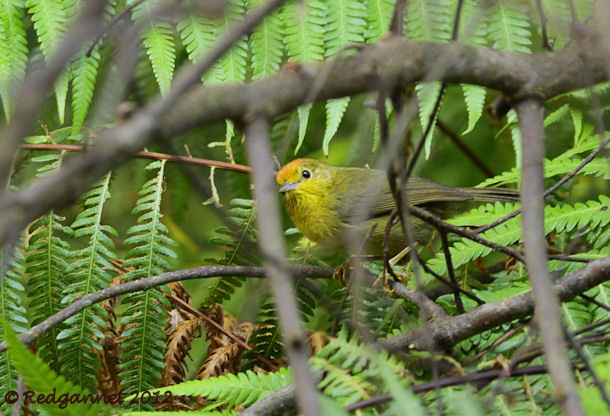
 

Thirteen of the visit’s twenty birds were seen at the lay-by before even starting up the hill, including this morning’s life bird, a Black-winged Cuckoo-shrike.


Up and into the forest I went. The coral trees have showy red flowers that attract many varieties of bird, but at this time of year they are in leaf rather than flower.


Paris Peacock Papilio paris
In the garden at the Outdoor Education Centre (Google Earth ref; 22°25'48.05"N 114°10'51.51"E), were butterflies and some dragonflies in the small pool.
 
 
Lesser Blue Skimmer Orthetrum triangulare
 
 
Red-faced Skimmer Orthetrum Chrysis 

Following the road around gives access onto the path system. I suspect that there may be an aviary or exotic collection in one of the private houses there as many unlikely calls emanated from beyond a fence.

 
As usual, I chose the Red Route which describes a 3 km loop through the forest. A few steps and slightly rough stretches of path exist, but for the most part, the route is easy to walk and well maintained.
 

Very few birds were seen for the large part of the walk, with a consistent call frustrating me. As I came full circle, the path crosses the stream and a Common Blue Jewel, Rhynocypha perforata, damselfly caught my eye. A few males were jousting above the stream’s surface while females waited provocatively.
 

Birds seen; 20

Black Kite 1, Spotted Dove 6, Black-winged Cuckoo-shrike 2, Scarlet Minivet 8, Grey -chinned Minivet 2, Great Tit 15, Yellow-cheeked Tit 1, Velvet-fronted Nuthatch 3, Red-whiskered Bulbul 15, Light-vented Bulbul 6, Chestnut Bulbul 2, Yellow-browed Warbler 3, Japanese White-eye 20, Silver-eared Mesia 2, Blue-winged Minla 10, Rufous-capped Babbler 3, Oriental Magpie Robin 3, Scarlet-backed Flower-pecker 2, Fork-tailed Sunbird 3, Gray Wagtail 1

Buses 102 and 106 leave from just outside the World Trade Centre on Hong Kong Island (starting just after 06.00. For a really early start try N170 from the same stop, or the 24 hour bus N122 which runs every 15 mins from the first bus stop on Hennessey Road, opposite Sogo). They run through the tunnel to Hung Hom Station and a chap could be on an East Line (formerly known as the KCR, Kowloon Canton Railway) train heading to China in moments. Using the subway system would involve 3 changes of train to achieve the same result. Returning to the island, the buses run from the first stair off the footbridge out of Hung Hom Station.

Tai Po Market Station is on the East Line. Taxis are easily available from the station and cost $HK25 (@ $HK12 = £1) at the time of writing. Green minibus 28k runs up the hill from the railway station and stops close to the lay-by. Ask the driver for Tai Po Kau (pronounced How). There is usually a steady flow of taxis past the lay-by for return, unless it is raining.

The East Line connects to the rest of Hong Kong’s transport system at Hung Hom or Kowloon Tong.

Previous posts from Tai Po Kau can be found at the links below;
http://redgannet.blogspot.co.uk/2010/12/hong-kong-twitching-pt-1-tai-po-kau.html
http://redgannet.blogspot.co.uk/2012/03/tai-po-kau-hong-kong-march-2012.html

Visit the dedicated Asia Page for more from Hong Kong, including; Sha Lo Tung and Long Valley.

Sunday, 28 October 2012

Mai Po, Hong Kong, Oct 2012

The Hong Kong chapter of the WWF (that’s the World Wildlife Fund, not the World Wrestling Federation), have joined the Hong Kong Transport System in baiting Redgannet to see if he would crack. My permit application had not been received and entry was denied. It might have been possible to get a permit at the gate, but I had not brought my passport. For future reference, a passport is essential, even with a pre-approved permit.
 
 
Though…..the young lady at reception hesitated to suggest it, but I might be able to join a group tour, only it would be conducted in Mandarin. It turned out that the beautiful leader, Apple, had a good turn of English and I signed up to walk with Mr Li, his wife and his mother.


Mrs Li Senior, despite using a pair of pink plastic binoculars pulled the first bird out of the bag with a red-letter Oriental Stork. It was seen beyond the multi-storey hide at gei wai 11(?). Unfortunately, I had come straight from Long Valley and my focussing problem was still bothering me. You should not have to be exposed to pictures like this, but a lifer is a lifer and let’s be honest, you must be used to it by now.
 

We were on a timer and headed straight out towards the mangrove boardwalk. A flycatcher along the way had us vascillating between Asian and Japanese Paradise Flycatcher. In the end, the darker back pushed me towards the Japanese form. It was now that it suddenly occurred to me that I had just bought a new UV filter for my lens. This proved to be the cause of the focussing problem.
 

From the mangrove hide, the water was hundreds of meters away, but a Little Egret, a few Marsh Sandpipers and Common Redshanks fed in the shallow water of a small inlet to the north. Way out, hundreds of Great Cormorants were waiting for some depth to return to the bay while a few Common Greenshanks stalked Mudskippers on the flats.
 

There were plenty of distant Lesser Sand Plovers. A few, noticeably larger, were Greater Sand Plovers.
Common Kingfishers were seen a few times as well as a couple of White-throated Kingfishers and a single Black-capped Kingfisher.
 
 
The tide was due to reach its height at 16.30, but we had to leave slightly before this to get back to the centre and end our tour before dark. The tide was still a very long way off. At only 1.6 – 1.8 meters, it was never likely to push the birds as far as the hides. Mr Li had scoped a Black-faced Spoonbill and I had become ridiculously excited by a young rail-like Eurasian Moorhen, but we had to leave.


A pair of Ospreys made a flypast as we walked back along the control fence. This is the fence that restricts passage to or from the mangroves and Deep Bay. It is a throwback to pre-1997 when Hong Kong was governed by the British, but it is still scrupulously maintained.
 

Birds seen; 43

Little Grebe 6, Oriental Stork 1, Great Cormorant 500, Grey Heron 30, Great Egret 20, Little Egret 25, Chinese Pond-heron 12, Black-crowned Night-heron 20, Black-faced Spoonbill 1, Osprey 3, Eastern Marsh Harrier 1, Spotted Eagle 1, White-breasted Waterhen 4, Eurasian Moorhen 3, Lesser Sand-plover 150, Greater Sand-plover 4, Little Ringed Plover 1, Black-winged Stilt 1, Common Sandpiper 4, Common Greenshank 10, Marsh Sandpiper 8, Wood Sandpiper 3, Common Redshank 15, Eurasian Curlew 3, Spotted Dove 40, Asian Koel 2, Greater Coucal 3, Common Kingfisher 3, White-throated Kingfisher 2, Black-capped Kingfisher 1, Long-tailed Shrike 4, Japanese Paradise Flycatcher, Eurasian Magpie 2, Collared Crow 1, Barn Swallow 6, Light-vented Bulbul 80, Japanese White-eye 6, Masked Laughingthrush 3, Oriental Magpie Robin 4, Black-collared Starling 6, White Wagtail 1, Eurasian Tree Sparrow 6, Nutmeg Mannikin 8.
 
Mr Li very kindly sent me one of his pictures of the Oriental Stork to make up for my fuzzy one.
 

For more posts from Mai Po, follow the links below;
http://redgannet.blogspot.com/2010/05/mai-po-hong-kong-hkg.html
http://redgannet.blogspot.com/2009/06/weather-predictions-for-hong-kong-this.html
http://redgannet.blogspot.com/2011/05/hong-kong-hangover-mai-po.html
http://redgannet.blogspot.co.uk/2012/03/mai-po-hong-kong-march-2012.html

Visit the dedicated Asia Page for more from Hong Kong, including; Tai Mo Shan and Victoria Peak.

Saturday, 27 October 2012

Long Valley, Hong Kong, Oct 2012

It seemed as though the Hong Kong Transport System was toying with me this morning and I would swear that I spent more time waiting for buses than bird watching. It was already light when I arrived at Yin Kong and the ladies were busy tending their crops, seemingly too busy to point and laugh as is their custom.

 
The approach to the lettuce fields had already brought Red-whiskered Bulbul, Nutmeg Mannikin and an Asian Koel which was strangely subdued this morning. The camera was playing up again and struggling to gain focus. Even using the Live View function with the 10x magnification focussing facility, the pictures were soft and fuzzy. A Light-vented Bulbul, greeting the dawn with a lusty song, looked great in the Bushnells, but proved to be a big disappointment through the Canon.
 

Motacillas were abundant this morning with (White-faced) White Wagtails being the most numerous. I would usually have photographed the pipits for later perusal, but the indistinct supraloral stripe and a relict shade of red on one of them made the identification of the Red-throated Pipit straightforward.
 

It would not help to describe a route through the agricultural plots of Long Valley.
The bunds are higgledy, the paths are piggledy and it is quite easy to lose one’s sense of direction (the area is only small and surrounded by either river or exit, so the chances of actually getting lost are minimal). A large expanse of tall grass had been cut since my last visit and the boggy result was seething with birds. Little Egrets, Chinese Pond-herons and Wood Sandpipers were all greatly outnumbered by wagtails in various plumages. Dusky Warblers "Tchacked" their way through what was left of the standing vegetation at the top end.

 
I hesitate to use the word flock for a group of Oriental Skylarks, as I have never seen them grouped together before. Larks are often referred to as an exaltation, but these birds were sitting quietly on a dry patch in the middle of a boggy mess, not really living up to the billing. The collective term, ‘slump’ came to mind.
 

A Common Snipe was big enough in the frame for the focussing problem to be not too apparent, but the Common Kingfisher felt like a missed opportunity.
 

Deep into the fields is a chain-link fence bordering a couple of fallow ponds.Growth here has overgrown the fence and provided an effective hedge which gave cover to a young Slaty-breasted (Banded) Rail. It lurked in and out of cover, coming out into the open and I was cursing my inability to focus at less than 10 meters.
 

An Oriental Greenfinch stopped by. It was only later that I realised that it might provoke an eBird email, but it would not have made a good picture today. The yellow windows in the wings were clear to see as it flew and the green body with a grey head were enough for me to be sure.

 
I did manage to fix my camera later, by removing the UV filter. It was new and supposedly a genuine Hoya filter, but I have grave doubts about that now. As soon as the filter was removed, focus became sharp again. If only I had thought of it earlier!
 
Birds seen; 37
Little Egret 6, Chinese Pond-heron 15, Slaty-breasted Rail 1, White-breasted Waterhen 4, Little Ringed Plover 3, Black-winged Stilt 22, Common Sandpiper 1, Wood Sandpiper 12, Common Snipe 30, Greater Painted-Snipe 3, Spotted Dove 25, Asian Koel 1, Common Kingfisher 1, Long-tailed Shrike 3, Collared Crow 2, Skylark 1, Oriental Skylark 5, Barn Swallow 6, Red-whiskered Bulbul 8, Light-vented Bulbul 35, Sooty-headed Bulbul 5, Dusky Warbler 20, Common Tailorbird 2, Yellow-bellied Prinia 1, Plain Prinia 1, Japanese White-eye 10, Oriental Magpie Robin 5, Stonechat 12, Crested Myna 40, Western Yellow Wagtail 25, White Wagtail 50, Red-throated Pipit 6, Black-faced Bunting 3, Oriental Greenfinch 1, Eurasian Tree Sparrow 30, White-rumped Munia 20, Nutmeg Mannikin 40.
 
 
To reach Long Valley at Yin Kong, Take Bus 76K from Sheung Shui Rail Station on the East Line. Ask the bus driver for Yin Kong, on Castle Peak Road (Google Earth ref; 22°30'17.11"N 114° 6'39.78"E). If the bus stops immediately after a right turn, you have passed the entrance to the lettuce fields. Retrace your steps for about 400m. If the bus tries to drop you on the edge of a motorway, you are about 200m short of the turn. To access the East Line via the MRT from Hong Kong Island can be a bit convoluted.  Bus N170 runs all night from outside the World Trade Centre in Causeway Bay. Using this bus allows you off the island before the MRT starts up in the morning.
 
Follow the links below for more posts from Long Valley.
 
Visit the dedicated Asia Page for more from Hong Kong including, Mai Po and Tai Po Kau.

Monday, 16 July 2012

Ho Chung Valley (nearly), Hong Kong, July 2012

A visit to Ho Chung Valley went slightly awry this morning as I found myself in a village full of angry dogs barking themselves hoarse as I passed. The website of the Hong Kong Bird Watching Society gave me the idea to visit, but I guess I didn’t follow the instructions carefully enough and ended up in Luk Mei Tsuen.
As I stepped from the bus, a small path led into the trees on the left. I followed the path and immediately began finding birds. Masked Laughingthrushes and Common Tailorbirds made plenty of noise while the Oriental Magpie Robins lent a more tuneful quality to the early morning chorus. There were plenty of birds to find, so it didn’t immediately occur to me that I might be in the wrong place.

Soon I came into the village where dogs came out from almost every house and began barking, one of them even snapped at me. I was feeling uncomfortable, so I checked with a passerby and found that I was not in Ho Chung as I had hoped. On asking how to get to Ho Chung, she pointed me towards a path, but warned that it was very dangerous with lots of snakes. This counts as flirting in my book!

Red-whiskered Bulbuls were especially common this morning and with the red pen from yesterday barely dry, another sighting of a Hair-crested Drongo was had.
No snakes were found, but I came out onto a concrete drain with a road leading left and right. As it happens, I should have turned right and followed the drain upstream to reach Ho Chung, but I decided to bail out and return to Sha Lo Tung instead for the rest of the morning.
For next time, minibus number 1 goes from exit C2 of Choi Hung MTR station, heading for Sai Kung.
It goes across a roundabout, then over a small contained river before stopping opposite the Marina Cove Supermarket at Google Earth ref; 22°21'21.03"N 114°15'5.20"E . Retrace your steps to the river and follow it upstream to Ho Chung Valley.

Species seen; 17

Black Kite 2, Spotted Dove 12, House Swift 4, Hair-crested Drongo 2, Blue Magpie 3, Eurasian Magpie 2, Large-billed Crow 4, Barn Swallow 6, Red-whiskered Bulbul 30, Light-vented 3, Common Tailorbird 4, Masked Laughingthrush 3, Oriental Magpie Robin 6, Black-collared Starling 3, Crested Myna 8, Fork-tailed Sunbird 2, Eurasian Tree Sparrow 10.

Friday, 13 July 2012

Sha Lo Tung, Hong Kong, July 2012

It was a good day to try something new. Summer in Hong Kong is hot and wet with little to entice a chap up the steep slopes of Tai Mo Shan or out onto the mudflats of Deep Bay, so I cast around for an easy option. The website of the Hong KongBird Watching Society came up with a few suggestions and it was the SSSI at Sha Lo Tung (Google Earth ref; 22°28'0.91"N 114°10'46.74"E) that caught my eye. It looked easy enough to find, with flat terrain and the details suggested that it was productive even through the summer.


All looked promising at 07.00 as I walked up the approach road to the sound of Red-whiskered Bulbuls and Oriental Magpie Robins. Barn Swallows swooped over the rank area to the left of the road as I stopped to allow the glass on my binoculars and camera to acclimatise to the heat and humidity. Masked Laughingthrushes mocked me by sitting out in the clear morning light until my lenses eventually cleared, then they flew off. A Common Kingfisher flashed by on the small stream that passes beneath the road.


There were signs pointing me into the valley and towards Fung Yuen Butterfly Reserve, which (I am led to believe) earned the area its Site of Special Scientific Interest accolade. The forest and reserve is just across a footbridge and past the visitor centre. Strictly speaking I think that a permit should be obtained before entering, but there were no barriers and the visitor centre was closed, so I went straight in.


Inside the forest, Yellow-bellied Prinias, Japanese White-eye and Common Tailorbird alerted the world to my presence before I arrived at a ‘garden’ amongst the trees. Flowers and host plants attracted butterflies to this managed area and a couple of photographers were already at work in the shaded glade.

Great Mormon Papilio memnon


I had a go myself, but they don’t sit still for long and the sun had yet to rise above the trees to shine into the garden. I must confess that I got rather carried away, only looking up occasionally to register a Fork-tailed Sunbird and a small flock of Hair-crested Drongo.

Paris Peacock Papilio paris
A path lined with banana plants and Ginger Lilies led to Phase 2 which also contained a small puddle which roused the odonata spotter in me. A bench in the shade provided the perfect opportunity to stop and just watch.

Black-banded Gossamerwing Euphaea decorate

Some White-backed Munias were perched on the fence across from me and when they came down to the base of a stick poking out of the puddle, I assumed that they would take a drink. Instead, they reached into the water and plucked strands of pondweed from the water and shlurped them up like spaghetti.


By mid-morning, the sun had reached into the gardens and was attracting the butterfly watchers. They came by the score on this Saturday morning and a well placed subject caused quite a scrum. The advent of digital photography has brought a lot of new people out into the fields and forests, but unfortunately, respect and etiquette has not kept pace with the technological revolution. It seemed also that getting the photograph was more important than the subject and the surroundings. Plants (and even other visitors) were routinely trodden to get macro shots and only a few photographers even knew the names of the butterflies that they were shooting. Many of them wore cotton gloves. Is that a lepidopterist thing I wonder?


I was in two minds about the garden. It has effectively been created by cutting into the secondary forest and Fung Shui woodland (Fung Shui woodlands are popular places to site Chinese tombs to take advantage of the ‘vital qi’. Small structures housed earthen containers which in turn held the earthly remains of an esteemed ancestor). It has a managed, artificial air, but the birds and butterflies seem to love it.


Weekends are very busy. I returned the next day to find that Sundays are even more popular than Saturdays. With so many people and so few manners, I did not make it as far as the garden before turning back and going home. Try a weekday. Access can be had from early in the morning. The visitor centre is open every day to take a contribution of HK$20  for entrance.

Bird species seen; 22

Great Egret 1, Little Egret 4, Chinese Pond Heron 2, Black Kite 2, Spotted Dove 3, Common Kingfisher 1, Hair-crested Drongo 8, Large-billed Crow 2, Barn Swallow 20, Red-whiskered Bulbul 20, Light-vented Bulbul 6, Common Tailorbird 4, Yellow-bellied Prinia 2, Japanese White-eye 5, Masked Laughing Thrush 4, Oriental Magpie Robin 8, Black-collared Starling 5, Crested Myna 12, Fork-tailed Sunbird 5, Eurasian Tree Sparrow 10, White-rumped Munia 5, Nutmeg Munia 4.

Butterfly species seen; 22

Water Snow Flat Tagiades litigiosa, Chinese Dart Potanthus Confucius, Tailed Jay Graphium Agamemnon, Common Mormon Papilio polytes, Great Mormon Papilio memnon, Paris Peacock Papilio paris, Common Birdwing Troides Helena, Red-base Jezebel Delias pasithoe, Small Cabbage White Pieris rapae, Lemon Emigrant Catopsilia Pomona, 3-spot Yellow Eurema blanda, Purple Sapphire Heliophorus epicles, Common Hedge Blue Acytolepsis puspa, South China Bush Brown Mycalesis zonata, Large Faun Faunis eumeus, Angled Castor Ariadne ariadne, Blue Admiral Kaniska canace, Colour Sergeant Athyma nefte, Red Ring Skirt Hestina assimilis, Blue Tiger Tirumala limniace, Common Tiger Danaus genutia, Blue-spotted Crow Euploea midamus,

Orange-tailed Sprite Ceriagrion auranticum

Odonata species seen; 7

Black-banded Gossamerwing Euphaea decorate, Common Blue Jewel Rhynocypha perforata, Orange-tailed Sprite Ceriagrion auranticum, Common Flangetail Ictinogomphus pertinax, Common Blue Skimmer Orthetrum glaucum, Common Red Skimmer Orthetrum pruinosum, Russet Percher Neurothemis fulvia

With a field guide from the visitor centre, I was able to identify 22 species of butterfly. I am sure that a practiced eye could do far better. The site is small and easy to negotiate without long tramping marches and steep sweaty slopes. Minibus 20a runs every 20 minutes from the rail station at Tai Po Market and stops within 250m of the reserve. The minibus often fills up for the return journey and people get left behind. Bus 75k passes the bottom of Fung Yuen Road. The stop is at Google Earth ref; 22°27'32.53"N 114°10'49.69"E.

There is some development going on at the top of the road and there are concerns that life is encroaching more and more into the valley.

Saturday, 31 March 2012

Tai Po Kau, Hong Kong, March 2012

Today’s visit to Tai Po Kau could also be described as ‘A Day in the Life of a Coral Tree’. Ostensibly this was a visit to a wonderful hill forest in the former New Territories, but all the action took place either in the lay by at the entrance, or in the alien Coral Trees.
I arrived shortly after daybreak and found birds as soon as I stepped from the minibus at Google Earth Ref; 22 25 58N 114 11 14E. Blue-winged Minla and Chinese Bulbul were seen in the bushes and an accipiter, probably the Crested Goshawk, circled overhead before I even had my binoculars out.


Across the road, the lay by was alive with bird song. Red-crested Bulbuls, Japanese White-eyes and Oriental Magpie Robin were all proclaiming their presence and a short trip up the slope to the right brought Silver-eared Mesia and a Great Tit (P m commixtus). In fact of the 20 birds seen today, 16 were seen before I ventured up the slope to the forest.
The slope to the left of the lay by provides access to the forest on the slopes above. It is not too arduous and shortly brings you to a couple of small holdings that have been completely cleared. At the top of the road is a fitness area and the marked walking routes start from here. I usually follow the easiest Red Route, but this morning, I wanted to take a quick look at the coral trees at the Outdoor Study Centre.

The Coral Tree, Erythrina speciosa, is a native of South America and flowers in March with beautiful red flowers like clusters of tiny, red, elephant tusks. These attract birds from all over the forest to feed from the flowers and Fork-tailed Sunbirds especially love them.
Fork-tailed Sunbird female
One stand of trees in particular is a draw for photographers and this Saturday morning, they were out in force. The coral trees are by the road which climbs a slope here and puts the camera and flowers on the same level. Bathed in the early morning sun, it was irresistible to birds and bird watchers alike.

Fork-tailed Sunbird male
The male Fork-tailed Sunbird’s head is iridescent green and causes havoc on my colour receptors. Too much light can be a bad thing. I had to stop down a little to avoid flare. The female however is dull green and didn’t present any exposure problems.

Japanese white-eyes have varied tastes, but appear to relish the sweet nectar from the coral tree flowers.

At the top of the slope by the fitness park, I had already seen an Orange-bellied Leaf-bird, but it was silhouetted at the top of a tall cotton tree, another alien species. Although the pair visited the shaded trees, when they came to the Outdoor Study Centre, they allowed me a much better look. The male has the bright orange belly with dark blue primaries and throat with contrasting lighter blue sub-moustachial streaks. The female is much duller. Her belly is still orange, but she lacks the contrast in the wings and throat.

The Crested Goshawk flew over again performing its shivering display and showing the fluffy uppertail coverts clearly, like a little ballet tutu around the base of the tail. At last I struck out into the forest and met a couple of other birders who were trying to coax a Pygmy Wren Babbler from the undergrowth near the picnic site. The wren babbler responded to the playback and I heard the bird, but it did not come out to be seen. It was unfortunate that the coaxers continued to try to tempt it out with playback from a smartphone wrapped in a large leaf. This was too sustained for me and I gave them my reasons for leaving and moved on.
Chestnut and Mountain Bulbuls made plenty of noise in the forest and another bird kept me looking for ages, but I was unable to locate it. It was very close and singing loudly. I tried to imitate it, but it wouldn’t be fooled into showing itself. Grey-cheeked Minivet were fairly common and there may have been a female Scarlet Minivet too, but it was too quick.

Tai Po Birds seen; 20
Grey Heron 1, Great Egret 1, Cattle Egret 15, Black-eared Kite 5, Crested Goshawk 2, Spotted Dove 15, Barn Swallow 6, Grey-chinned Minivet 15, Red-whiskered Bulbul 35, Light-vented Bulbul 15, Mountain Bulbul 3, Chestnut Bulbul 4, Orange-bellied Leafbird 4, Oriental Magpie Robin 2, Silver-eared Mesia 5, Blue-winged Minla 2, Great Tit 1, Yellow-cheeked Tit 1, Fork-tailed Sunbird 15, Japanese White-eye 12.

Take a cross-tunnel bus (N118 is good from Cannon Road just beyond the World Trade Centre in Causeway Bay) to get across the harbour to Hung Hom Station on the East Rail Line. Take the East Rail Line to Tai Po Market Station. There is a minibus station by the rail station. Take 28K to Tai Po Kau lay by Google Earth Ref 22 25 58N 114 11 10E. If you prefer a taxi, it is only a five minute ride.

For an earlier post from Tai Po Kau follow the link below;
 http://redgannet.blogspot.com/2010/12/hong-kong-twitching-pt-1-tai-po-kau.html

Visit the dedicated Asia Page for more posts from Hong Kong, Including Aberdeen, Tai Mo Shan and Long Valley
Tai Po Kau, Hong Kong,

Thursday, 29 March 2012

Mai Po, Hong Kong, March 2012

I had not applied in time for the required permit to make a visit to Mai Po during this visit. Even so, I was within a 10 minute bus ride and the approach road is often very productive. Bus 76K runs past Yin Kong, where I had spent the morning at Long Valley and it dropped me at the end of the road.


Chinese Bulbuls and Red-whiskered Bulbuls were the first birds seen, followed very closely by Barn Swallows and Eurasian Tree Sparrows. A Common Kingfisher flashed past and the edges of the fish ponds held Common and Wood Sandpiper.


The tall grasses, reeds and bushes along the road held Plain and Yellow-bellied Prinias, singing constantly.


At the reception car park a Spotted Dove was collecting material for a nest that was under construction in the tree that shades the notice board. A flock of Azure-winged Magpies can usually be found along the road or close to the office. There were about 15 of them today.


I decided to ask if it would be possible to get a permit for immediate entry. It was, but only because the limited amount of permits had not been allocated. Passport and membership of an internationally recognised bird watching society are needed as forms of identification and HK$120 entrance fee is payable.

View across gei wai 8, the Tower Hide.
The tide would be falling by now and it would not have been worth the trek out to the mangrove boardwalk hides, so I just took a gentle stroll out towards the popular gei-wai 16/17 AT Google Earth ref;  22°29'16"N 114° 2'19"E.

Here Great and Little Egrets mingled with Black-faced Spoonbills. Mai Po is a hugely important site for the spoonbills and on my first visit here, I saw 50 out of the estimated world population (at the time) of around 300 birds. Today, I felt that I might be witnessing significant numbers when 3 counts went over 140. My final and highest count put the number of Black-faced Spoonbills in Gei wai 16/17 at 163. The intervening years had obviously been good to them and enquiries back at the office revealed that other populations had been found and that sustained conservation efforts had brought the estimated world population to over 3,000 birds.


Note the black tips to the primaries on the young bird and the yellow crest and breast band of the adult. The adult also shows more black on the face and has a darker bill.


I had been seeing a few dragonflies today despite a cool wind coming in across the water. It is not often that I have to use the flash on an ode. I believe this one to be a Pale-spotted Emperor, Anax guttatus.


Mai Po Birds seen; 51

Little Grebe 10, Great Cormorant 25, Grey Heron 15, Great Egret 35, Little Egret 200, Cattle Egret 60, Chinese Pond Heron 20, Yellow Bittern 1, Black-faced Spoonbill 163, Garganey 2, Northern Shoveler 20, Black-eared Kite 4, Marsh Harrier 1, White-breasted Waterhen 6, Common Moorhen 15Black-winged Stilt 15, Pied Avocet 300, Grey Plover 4, Little Plover 2, Black-tailed Godwit 1, Common Redshank 1, Common Greenshank 15, Wood Sandpiper 4, Common Sandpiper 3, Red-collared Dove 1, Spotted Dove 15, Asian Koel 2, Greater Coucal 2, House Swift 30, Common Kingfisher 1, White-throated Kingfisher 1, Barn Swallow 200, Olive-backed Pipit 2, White Wagtail 1, Yellow Wagtail 1, Grey Wagtail 1, Red-whiskered Bulbul 8, Light-vented Bulbul 60, Oriental Magpie Robin 8, Yellow-bellied Prinia 25, Plain Prinia 8, Masked Laughing Thrush 6, Great Tit 1, Japanese White-eye 4, Long-tailed Shrike 2, Azure-winged Magpie 15, Large-billed Crow 1, Collared Crow 2, Crested Myna 20, Black-collared Starling 10, White-shouldered Starling 2.
Directions for Mai Po are very similar to those for Long Valley and it was easy to visit both reserves today. It depends of course on how much time you wish to devote to each and when the high tide is due.
Black-necked Starling

Using the bus through the cross harbour tunnel saves at least 30 minutes on the journey into the New Territories and enabled me the luxury of a lie-in until 05.30 this morning. Today, the N118 (HK$13.40) was the bus of choice, caught from the stop at Cannon Road outside the World Trade Centre in Causeway Bay, Hong Kong. The bus dropped me at Hung Hom, the first station on the East Rail Line heading towards the Chinese border. Continue to Sheung Shui (HK$8) and cross the road to the bus stop under the footbridge.


Take Bus no. 76K (you will pass Yin Kong, Long Valley, on the way). The road stops at a T-junction at San Tin. It turns right before doubling back on itself at a bus terminus. From the terminus it is approx 2.6 kms to Tam Kon Chau Road. The reserve is approx 1.5kms along this road.
For other posts from Mai Po, follow the links below;
Visit the dedicated Asia Page for other posts from Hong Kong, including Tai Mo Shan, Tai Po Kau and Hong Kong Wetland Park
 Black-faced Spoonbill, Hong Kong, Mai Po