Showing posts with label Safa Park. Show all posts

Wednesday, 23 May 2012

Safa Park, Dubai, 2012

The heat in Dubai was intense and I was unable to reach Safa Park before 10.00 when the sun was already very high and casting short shadows. On a fiercely hot Sunday morning, nobody was seen in the park and none of the refreshment stalls were open. Bring your own water. Most of the birds had sensibly tucked themselves away in the shade and gone quiet.

Hoopoes could still be seen picking in the lawns and tossing their prey up to catch it in their long decurved bills. Beautiful flame-flowered trees line the paths, but they looked washed out in the harsh sunlight.


A pair of Asian Pied Starlings, an introduced species, had made a messy nest from grasses and kite strings in one of the flame-flowered trees that line the paths. I was heading towards the waterfall in the centre of the park. This had proved to be a productive area on my previous visits.


Acacia-type trees here held Purple Sunbirds and some White-eared Bulbuls. It was a relief to be out of the sun for a short while, but the dragonflies quickly tempted me back out into the light. This one above, I think is a Green Skimmer, Orthetrum Sabina.


I base my guess on field guides of surrounding areas, but if anyone knows of similar odes to be found in the Middle East, I would be pleased to hear from them. The individual sitting out on the lawns is probably a Violet Dropwing, Trithemis annulata.


A Spotted Flycatcher gave me cause to look twice. It appeared to have an outsize bill and a very big eye. Again, I would be pleased if anyone can tell me a little more about it.

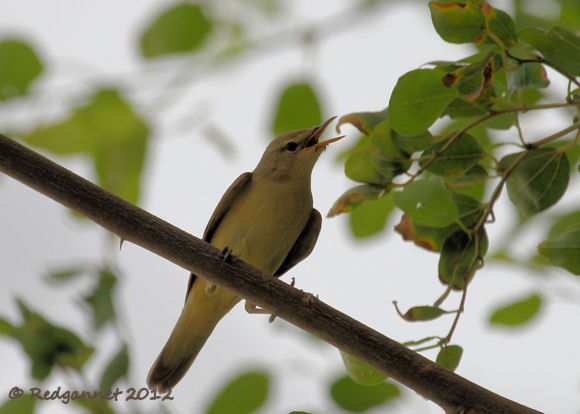
I was unable to narrow this one down to a species. I take it to be a reed warbler. It was seen a couple of times in the acacia trees near the waterfall

Don’t be tempted to catch the bus from the train station to speed things up. It may save a few minutes walking, but it drops you at the top end of the park, then you have to cross a main road and back-track to the gate. The few moments saved were lost by the bus waiting for 10 minutes before departing.

Crested Lark

Birds seen; 21
Mallard 3, Red Wattled Lapwing 15, Black-headed Gull 30, Eurasian Collared Dove 25, Laughing Dove 6, Rose-ringed Parakeet 4, Pallid Swift 4, Green Bee-eater 2, Indian Roller 4, Eurasian Hoopoe 12, House Crow 80, Crested Lark 3, Red-vented Bulbul 8, White-eared Bulbul 3, Graceful Prinia 2, Spotted Flycatcher 1, Common Myna 120, Asian Pied Starling 4, Purple Sunbird 12, House Sparrow 30, Nutmeg Mannikin 4.


For more posts from Safa Park follow the links below;

Visit the dedicated Middle East Page for more from the area including; Mushrif Park and Ras al Khor

Friday, 11 March 2011

Safa Park, Dubai Pt 2.

Standby always leaves me in a quandry. We have to cover for our colleagues who may be sick, or caught in traffic and take on their duty with only 45 minutes notice. Of course I have to pack for different climates and trip lengths of up to 9 days, but more to the point, which field guide do I bring? Will I need the scope?
The call came for a trip to Dubai and we arrived at the hotel there at mid-morning the next day. The Sibley guide to North America, packed in anticipation of a trip to the east coast, for the first time in its life, proved useless.
Considering the timing and the preparations I had had a chance to make (none), I opted for the easy choice of a nap and then an afternoon in Safa Park. It was a quiet visit, but still better than the thought of hanging on the telephone at an airport hotel in London.
There is a post describing the logistics and workings of the park on a previous post, 'Safa Park, Dubai.' On this occasion I was able to use the Dubai Metro which has a station called Business Bay within a 10 minute walk of Gate 5 at the park's south-east corner (Google Earth Ref; 25 10' 58"N 55 15' 02"E). I paid the required AED 3 (@ AED5 = £1) and the park was open to my watchings until 23.00.
Slender-billed Gulls are winter visitors to Dubai and I hoped that I might find one or two mixed in amongst a flock of Black-headed Gulls that were bathing on the fenced-off, bird sanctuary lake. The two species have a similar look in-flight and when in their winter plumages. The Slender-billed Gull is slightly the larger of the two and usually only has one small mark behind the eye. It is better defined than the smudgy marks of the Black-headed Gull and is often absent altogether. The bill is not actually especially slender as the name might suggest, but it is longer and darker than that of the Black-headed Gull (those of us who carry a few extra pounds are well aware of the slimming properties of dark clothing). Once the summer comes, the Slender-billed Gull stands out by maintaining its white head while the Black-headed Gull fulfils the promise of its name by developing the dark (actually brown, not black) head.
One individual struck me as strange as it flew in. It was marked with red smudges that may have been a result of staining, but the positioning of the marks made me wonder what the bird had been doing to achieve that pattern. Ideas on a postcard please.
With the two species sharing characteristics, habits and habitats, it seemed like a fair bet that there may be a few mixed in with the flock, but try as I might, I could not make a Slender-billed Gull out of any of them.
The Indian Rollers were still an obvious feature of the park, but as on the previous visit, they would not allow close approach and I had to be satisfied by admiring them from afar.
A canal, with a rocky bank on one side, runs from the waterfall to the boating lake in the centre of the park.
My previous visit had found this to be a productive spot for a few common waders. Today, it held Common Sandpiper and Red-wattled Lapwing.
In the trees surrounding the canal, I was following a few small warblers which proved to be Chiff Chaff. Relying on plumage and 'gizz' rather than than song took a little longer than it should have done until I got a good look at the dark legs in the photo below.
The green wash showed up strongly in the sunshine, but was much more muted when the bird was in shadow.
No trip to a Middle-east park would be complete without a look at the Hoopoe. There were plenty of birds around, picking in the soft turf of the communal lawns. This one flashed its erectile crest briefly as it landed.
If you are better placed than me and get more than 45 minutes to plan your trip to Dubai, may I recommend you to a site which can offer a selection of sites and advice for the region; http://www.uaebirding.com/birdingsites.html

Species seen; 21

Little Grebe 3, Little Egret 3, Eurasian Teal 5, Mallard 6, Red-wattled Lapwing 5, Common Sandpiper 3, Black-headed Gull 300, Caspian Tern 1, Eurasian Collared Dove 12, Laughing Dove 8, Rose-ringed Parakeet 4, Indian Roller 5, Eurasian Hoopoe 14, White Wagtail 8, Red-vented Bulbul 2, Song Thrush 3, Common Chiff Chaff 15, Purple Sunbird 3, House Crow 150, Common Myna 60, House Sparrow 400.

Wednesday, 5 January 2011

Safa Park, Dubai.

Safa Park had not featured on my list of things to do during a trip to Dubai, but a series of failures left it as the favoured option for exploration.

It is a city park, much like any other park in any other city, in that it has extensive lawns, picnic areas and playgrounds for the children. A few tell-tale signs that it is located within the Emirate of Dubai are a Ladies’ Garden and the towering pinnacle of Burj Khalifa which is visible from anywhere in the park.

I was not in a positive mood this morning and had resigned myself to seeing only the common and conspicuous species. I had never heard of the park before and did not realise its potential.

Those who have ever gasped at the electric blue of a roller’s wing will understand how my day brightened when an Indian Roller flashed across the path and into a tree across the lawns. If ever a family of birds were designed to be conspicuous and to lift a mood, it is the Coraciidae.

Even at rest, they are impressive birds with turquoise, lilac and cinnamon plumage and they sit out on prominent perches to scan for insects. If that isn’t obvious enough, when they fly, patches of the most dazzling blue, separated by a swathe of indigo flash from the primaries, primary coverts and tail. It is enough to take anyone’s breath away. How I wish that I could have captured even a taste of the colour sensation that is a flying roller, but instead I must thank, Arjun Haarith for allowing me to use this wonderful photograph.
The camera was to hand now in the hope that I would get another chance, but instead a Graceful Prinia sat up in a patch of marigolds to give my colour receptors a work-out. A Bluethroat was flitting in and out of the hedge alongside the flowerbeds. How typical that I waited all year to find one, then saw them on two consecutive trips.
Common birds that were to be expected in a park such as this were White-eared Bulbuls, Red-vented Bulbuls and Common Mynas. I had decided that any corvids seen would be counted as Brown-necked Ravens, but had forgotten to take House Crows into account.

The Ladies’ Garden looked the birdiest area that I had seen so far, but signs barring entry to bearded birders, left me peering keenly through the railings in a manner likely to cause any ladies within some discomfort. Luckily there were none, but an Isabelline Shrike, Asian Pied Starling and a Song Thrush made me wish that I was bold enough to sneak in while no-one was looking.
In the centre of the park is a waterfall that feeds through a channel into a boating lake. A stocky-looking egret was a white form of the Western Reef Heron. The slight droop to the strong orange-based bill, yellow/green legs and occasional dark smudges on the white plumage sets this form of the species apart from the more elegant egrets. Normally it prefers the coast, but Safa Park is within a mile of the shore and the water here had a salty smell to it.
A Common Sandpiper and a Greenshank were feeding along the edge of the channel. The Greenshank seemed to be having trouble on the slippery stone and slipped twice, losing its footing and almost falling in.
A “Graaaak” above, caused me to look up. The grating call of the roller has prompted suggestions that they should be allied with the Jays. They must have spent too long in the ‘pimp my plumage’ line and missed out on the vocal training during the time of the Great Creation.
Rollers were rolling! Three birds were participating in the display over the boating lake. They rose to about 30 m, then, as if at the top of a rollercoaster drop, they folded in their wings, using their upward momentum to coast over the summit of the climb and plummeted, jinking and flashing their magnificent colours as they fell. They finished with a flare and a flourish, landing in a group of palm trees where, presumably, a female perched in judgement.

Back on the ground, in the realms of normal, muted colours, some Red-wattled Lapwings were sitting out the midday hours by the edge of the channel. The waterfall is artificial with the water pumped up a small hill to cascade back down into the foamy pool. Beyond the hillock, is a fenced freshwater lake that held a few ducks including, a Gadwall, some Common Teal and a few Northern Shovelers. I have no reason to think that the provenance of the ducks might be in question, but the Egyptian Geese were possibly from feral stock. Common and Wood Sandpiper were feeding on the banks and Black-headed Gulls were roosting on the grass and drifting on the water.
As I left the park, another “Graaak” made me look up to see another five rollers displaying from the road signs on the motorway into Downtown Dubai. I wondered if it was not a little early to start the courtship displays. Information that I can find suggests that February was the time for rolling. Perhaps it was excitement as 2010 drew to a close and a new year approached. The pyrotechnics from the Burj Khalifa were spectacular at midnight, but as 2011 dawned, the rollers’ day-time fireworks would continue without property crashes and bail-outs from neighbouring Kingdoms.

Birds species; 33

Little Grebe 6, Grey Heron 1, Western Reef Egret 1, Egyptian Goose 2, Gadwall 1, Eurasian Teal 14, Mallard 12, Northern Shoveler 5, Grey Francolin 3, Black-winged Stilt 1, Red-wattled Lapwing 4, Common Greenshank 1, Wood Sandpiper 1, Common Sandpiper 4, Black-headed Gull 150, Eurasian Collared Dove 15, Laughing Dove 20, Rose-ringed Parakeet 6, Indian Roller 11, Eurasian Hoopoe 3, White Wagtail 3, White-eared Bulbul 20, Red-vented Bulbul 12, Song Thrush 3, Bluethroat 1, Graceful Prinia 5, Willow Warbler 5, Purple Sunbird 3, Isabelline Shrike 2, House Crow 150, Common Myna 50, Asian Pied Starling 5, House Sparrow 200.


Safa Park is within easy reach of Downtown Dubai and about 10 mins in a cab from the Emirates Mall on Sheik Zayed Road, the main drag through downtown. In the perimeter railings, there are 4 gates which open 08.00 ‘til 23.00. There is a 3 Dirham entry fee. On Tuesdays, the park is restricted to ladies and children only. A fenced and hedged section at the west end of the park is reserved full-time for ladies and children.

A little known author, Charlie, from 10000 Birds was lucky enough to visit Safa Park in May 2005 and catch the migrants as they passed through. I must give him and his friend Steve James a nod for the Willow Warblers. I was really struggling until I saw Steve's ID info and Charlie's picture of the yakutensis form.
I also find that a site called http://www.uaebirding.com/birdingsites.html exists. Like Charlie's post, I didn't see it until after my return, but if anyone is thinking of a trip to UAE, this should be your first port of call for information about sites and birds that may be seen there.