Showing posts with label LA River. Show all posts

Monday, 18 October 2010

LA River, Long Beach, California, USA, LAX

Regular readers will recognise a post from the LA River and a few might even ask about Callie the naked lady ( http://redgannet.blogspot.com/2009/08/come-on-in-waters-great.html ). She is still there, where Del Amo Blvd crosses the drain and she is still naked.

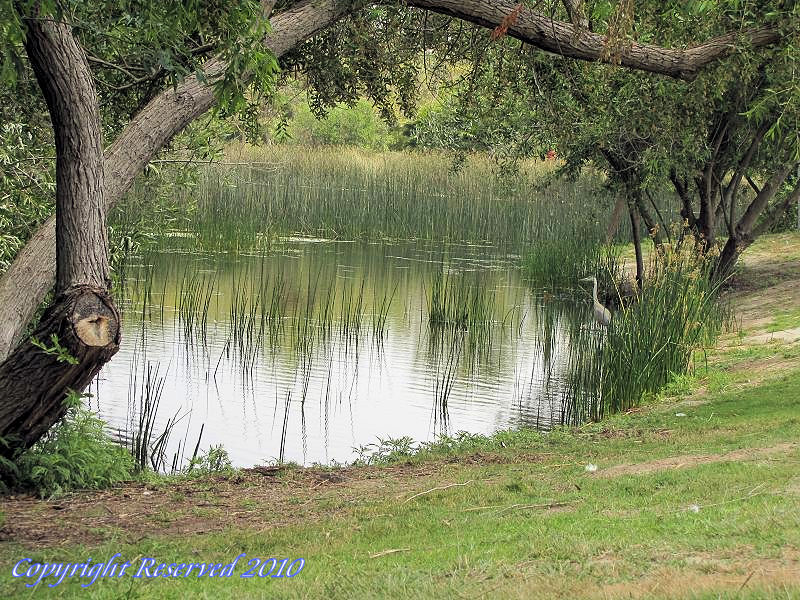
Perhaps she had been skipping through the shallows this morning as there were no birds in this part of the drain, but plenty either side.

As usual, Black-necked Stilts made up the bulk of the biomass as I walked downstream. Small flocks of Least Sandpiper held a few Western Sandpiper.

After long consideration I have decided upon Long-billed Dowitcher among the “peeps”. Most of the short-bills would have passed through by the end of September, with the long-bills over-wintering in greater numbers. A few juvenile birds showed relatively un-patterned tertials with narrow edges. Some of the winter plumaged adults showed broad edges and appeared to have a shorter bill, but there is too much overlap to distinguish between non-breeding adults. So despite having seen 200-plus dowitchers, I was only able to be sure about very few of them.

It is quite possible that the Short-billed Dowitchers inhabit the upper reaches of the drain in the open areas while the Long-billed Dowitchers prefer the extra cover provided by the little islands in the lower stretches. If I had known that I was coming to LA, I could have brought an appropriate field guide to help, but I was called at very short notice from standby, so I couldn’t predict which book to pack. Since carrying my full collection of guides would produce a few tonnes of emissions through fuel burn, I prefer to leave them behind and put myself to the test.

Dragonflies were already up and flying when I arrived this morning. The weather is still very warm and was forecast to top the 90’s today. Not bad for the second week of October. I followed Dominguez Gap for a while and noted five types of heron, Pied-billed Grebe and a Belted Kingfisher.

Double-crested Cormorants were sunning themselves on low snags. I was hoping that there might be a snake warming itself on the sunny bank, but there was no sign of any this morning.

Back on the drain, the highlight of the day was an Osprey that made a couple of low passes before landing in the shallow water.
It was great to be on an elevated bank and able to look down on an Osprey as it flew by.

Beyond Wardlow Rd, is a spot that the gulls seem to like as a roost. You can often see a few different species here and today there were 3 types. Conveniently, they all got together for a group picture with the Ring-billed Gull at the left, a California Gull, with the dark spot on its bill, in the middle and the larger, darker-backed Western Gull on the right.

Just up from Willow St., sediment has settled enough to form little islands. The greater concentration of birds here seems to indicate that they like this feature.

Ducks here included Cinnamon Teal, Blue-winged Teal and Mallard. A few American Avocets were joined by one or other of the dowitchers.

Downstream from Willow, the drain becomes a proper river with deeper water and probably a tidal influence this close to the ocean. Beyond this point one might find a few Kildeer, but most of the waders will remain upstream in the shallow water of the overspill from the main channel.

On reflection, I think that I would be best to start from this point in the future. Walking upstream from here in the morning would keep the sun over my right shoulder and behind me as the day progresses and I work my way upstream. Google coordinates for the section are are;

From Del Amo Blvd, 33*50’ 47”N, 118*12’16”W to Willow St., 33*47’18”N, 118*12’16”W

The Metro tram station at Del Amo is 750m to the west of the river on Del Amo Blvd.

Bus 181 runs north and south on Magnolia which is 600m east of the river on Willow.

Both tram and bus can be caught from the  Transit Mall at 1st St., Long Beach.

Today, I returned to Del Amo to take the Metro tram back to Long Beach. On the way back, I passed through Dominguez Gap, hoping to find a few dragonflies to photograph, but my lens had suffered a prolapse. The focussing element came loose from its guides and was clunking around inside. It was possible to achieve a limited range of focus by pointing the camera downwards and shaking the element to the end, but I would have to adjust my own position rather than rely on zooming or refocusing on a moving subject.

I only stopped once for a picture of a Bushtit as it had become fearfully hot and even Carrie had headed for the shade.

For other posts about Redgannet in California, follow these links;
Los Angeles, Ca.
LA River
http://redgannet.blogspot.com/2010/06/la-river-los-angeles.html
http://redgannet.blogspot.com/2009/08/come-on-in-waters-great.html
El Dorado Nature Center
http://redgannet.blogspot.com/2010/06/la-river-los-angeles.html
Orange County and Santa Anna Mountains
http://redgannet.blogspot.com/2010/03/los-angeles-california.html
Bolsa Chica Ecological Reserve,
http://redgannet.blogspot.com/2010/01/bolsa-chica-ecological-reserve-los.html
http://redgannet.blogspot.com/2010/05/bolsa-chica-los-angeles-california.html
Long Beach
http://redgannet.blogspot.com/2010/03/los-angeles-california.html

San Francisco, Ca.
Palo Alto Baylands
http://redgannet.blogspot.com/2010/02/palo-alto-baylands-san-fancisco.html

For more posts from other sites in America try the USA and Canada page tab at the top of each post.

http://redgannet.blogspot.com/p/posts-from-usa-and-canada.html

Birds Seen; 42
Pied-billed Grebe 3, Double-crested Cormorant 20, Great Blue Heron 6, American Great Egret 18, Snowy Egret 1, Green Heron 4, Black-crowned Night Heron 5, Mallard 30, Blue-winged Teal 8, Cinnamon Teal 15, Turkey Vulture 2, Osprey 3, American Coot 80, Black-necked Stilt 400, American Avocet 12, Grey Plover 1, Killdeer 30, Long-billed Dowitcher 6, Greater Yellowlegs 4, Western Sandpiper 60, Least Sandpiper 300, Dunlin 2, Ring-billed Gull 4, California Gull 25, Western Gull 12, Mourning Dove 8, Belted Kingfisher 1,Black Phoebe 7, Say’s Phoebe 1, American Barn Swallow 8, Northern Mockingbird 6, Bushtit 25, Western Scrub-jay 4, American Crow 60, Lesser Goldfinch 1, Common Yellowthroat 2, Song Sparrow 4, White-crowned Sparrow 4, Red-winged Blackbird 1, Brewer’s Blackbird 35, Great-tailed Grackle 1, Scaly Munia 1.

Sunday, 20 June 2010

LA River, Los Angeles

 June brings a phenomenon called the marine layer to Los Angeles.
A thick blanket of cloud depresses temperatures along the coast until the sun burns it off later in the morning.
The LA River drain looked very gloomy under the clouds. The birds were very sparse too.
A few Black-necked Stilts clucked at my intrusion and a single American Avocet looked very lonely.
This picture was taken later in the day when the light was better and the birds looked happier. On my last visit, a naked woman skipped across the drain for my entertainment ( http://redgannet.blogspot.com/2009/08/come-on-in-waters-great.html ), but there was no such show today to lift my spirits.
The hirundines had arrived since my last visit. Cliff Swallows were most abundant, and their nests were already empty with new prospective tenants sizing up their suitability.
Barn Swallows were less numerous with Nothern Roughwing Swallows only numbering a couple of dozen.
A Pacific Forktail was up early. The time was barely 07.30 and cool, so it was quite sluggish and let me approach quite close. The blue dots on it’s back are the distinctive trait of this species. I was looking forward to some dragonfly spotting later on in Dominguez Gap.
A cycle trail runs along the left edge of the drain as you face downstream. On the other side of the path is a strip of freshwater wetland. This is a restoration project which caught my attention on my previous visit. There were so many dragonflies that I almost forgot that I was supposed to be writing a bird blog.
In the Tule beds, Song Sparrows were calling and an African Weaver had found a home from home. I did not see any males, but I am led to believe that they are probably Northern Bishops.
A second weaver-like bird had me vascillating between alien and Icterid. I cannot decide what this one is. 
A Pied-billed Grebe had hidden her young in the edge of the rush bed while she hunted for food for them, but like youngsters the world over, they would not stay put and preferred to come out into the open to see what was going on.
A couple of guys on bicycles stopped to say hello on their way downstream. On their return they mentioned that there were plenty more birds further along. Sure enough, the further downstream I progressed, the more plentiful the birds were becoming. There was still not the selection that I enjoyed before, but the sun had burned through the June bloom now and I was more inclined to take pictures.
A small group of stilts appeared to be having a game of “it” (or “tag” if you prefer). It was probably behaviour associated with breeding and/or territory, but for all the world, they looked as though they were having fun.
Down the embankment on the left, beyond the end of the wetland strip, the habitat had become very dry. Some recently fledged Barn Swallow chicks were sitting on a chain-link fence being fed by their parents. They went frantic each time a parent bird approached and vied to be the one to receive the beak-full of food thrust down their throat. I noticed that the young birds did not scream at every passing swallow, which made me think that they were able to recognise their own parents at quite a distance. 
Back on the drain the number of birds was increasing. A few of the stilts had built nests out of wet weed. They will augment this low nest with more weed to raise the level of the nest above any rising water level.
The nesting materials looked green and wet from where I was. Surely this would be cold for the eggs, but it seems to work. This precocious chick was fending for itself while the parents foraged nearby.
I realised that a few avocets must be breeding as well when they began trying to shoo me off the path. Each time I took a few steps, a pair of avocets rose from a dry patch of ground in the drain and flew at me as if to intimidate me. They flared just in front of me and flew across the face of the Sun as though they could buffet me with their shadows. I moved along to get beyond their threat zone, but not without lingering long enough to fire off a few shots.
One of the positive aspects of the drain is that the trail along the top of the embankment puts the viewer at a good height for watching flying birds.

Now I had reached Willow Avenue where the concrete gives way to a less constructed waterway. From here it is shaped by the tides of the Pacific though only in respect of waterlevel. It is still encased in stone. Each road bridge over the river has access onto the road and thence to Pacific Coast Highway or Long Beach Avenue from where it is possible to catch a bus back to Long Beach.
A common sight along the river are the California Ground Squirrels. When you see how cute the youngsters are it makes you wonder why everybody doesn't have one. Then I was reminded that they have a reputation as plague carriers. But still, they are cute aren't they?

Bird species; 27

Pied-billed Grebe 3, Great Blue Heron 2, Great Egret 1, Snowy Egret 3, Green Heron 3, Black-crowned Night Heron 4, Mallard 100, Cooper’s Hawk 1, Red-tailed Hawk 4, American Coot 8, Black-necked Stilt 400, American Avocet 80, Kildeer 15, Boneparte’s Gull 1, Caspian Tern 14, White-throated Swift 1, Black Phoebe 2, Northern Rough-winged Swallow 25, Barn Swallow 60, Cliff Swallow 200, Bushtit 4, American Crow 12, Common Raven 2, House Finch 20, Common Yellow-throat 4, Song Sparrow 12, Red-winged Blackbird 6.
The next morning was thick with cloud again, so I elected to leave my camera at the hotel while I searched out and investigated a green splodge on the transit map. I was regretting that decision as I walked into a gem of a nature reserve called the Eldorado (perhaps I should I say nugget) Nature Centre.
From the outside it looks thickly forested with a fence and “no trespassing” signs. But when you reach the gate it becomes welcoming and very picturesque. It is open from 08.00 ‘til 17.00 every day except Mondays. The gate is locked promptly at closing time whether you are out or not. A well staffed visitor centre was catering for some groups of school children.
It is located in the wider expanse of Eldorado Regional Park and can be found on Spring Street just over the River.
The reserve looks to be popular with local people who walk it’s trails. There are 3 trails in the hundred acre wood, the paved quarter-mile trail, the 1 mile and the 2 mile trails. They weave a way along a stream that connects two delightful lakes.
I had already had a good look at a Golden-crowned Warbler and an Allen’s Hummingbird before I met Jerry, a trail steward. I was positively cursing not having brought the camera when he told me of some Great Horned Owl fledglings to look out for further along the path and kindly walked with me to make sure I didn’t miss them. We found three chicks from an original brood of four. The other chick had died when it’s wing became snagged in the fork of a tree.
In his capacity as trail steward, Jerry is possessed of intimate details along it’s length. He was able to tell me about the wildlife in the reserve and show me Hummingbird nests. Some had fledged, but a couple still held chicks.
Thank you to Jerry for the pictures to accompany the latter part of this post and for introducing me to the
In 'N Out Double Double burger.

Bird Species; 14

Double-crested Cormorant 2, Cooper’s Hawk 2, Forster’s Tern 1, Mourning Dove 4, Great Horned Owl 3, White-throated Swift 1, Anna’s Hummingbird 2, Allen’s Hummingbird 2, Northern Rough-winged Swallow 2, Barn Swallow 4, Cliff Swallow 15, Northern House Wren 1, Bushtit 40, Orange-crowned Warbler 3.