Tuesday, 3 July 2012

Vancouver Island Ferry, Vancouver, June 2012

Catching the ferry from the city to Vancouver Island is very easy, but even if you stay on the ferry at Swartz Bay and return straight back to the city, the round trips needs six hours at least. But why would you put in all that time and effort to go to Vancouver Island and then not even get off the ferry? Orcas! That’s why! The ferry passes through the outlying islands where the resident pods of Orcas patrol close to the shore. I don’t know how often they are seen, but the fact that they are seen at all is good enough for this long-odds gambler.


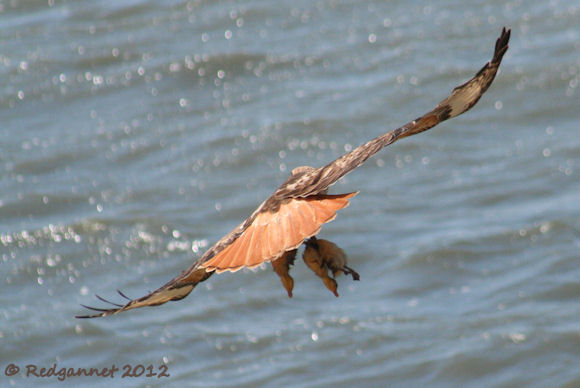
As it happens and before you get too excited, I will let you down gently and admit that the bet didn’t pay out on this occasion, but it was a beautiful day to be out on the water nevertheless. The picture is from a previous trip on a dedicated whale boat that leaves from Vancouver city.
From the terminal at Tsawassen (Google earth ref; 49 00 28N 123 07 41W), the ferry crosses the Strait of Georgia which separates Vancouver Island from mainland British Columbia. The water here was coloured with sediment, but was as flat as a mill pond. The wind was very gentle, bringing just a slight chill.


Glaucous-winged Gulls were the gull of the day with the only possible confusion being a Caspian Tern. Confusion would have been unlikely I agree, but after seeing so many G-WGs, I stopped checking.


They flew alongside the ferry and roosted on the many floating hazards to shipping.
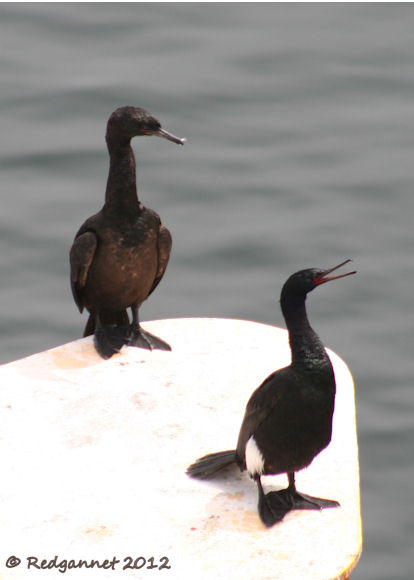
Pelagic Cormorants carried the torch for their family and were seen on the breakwaters and around the wharfs.

The ferry threads its way through a narrow channel between 2 islands (Google earth ref; 48 52 01N 123 18 25W) and I am told that this is the most common place to find the whales as the tide rips through bringing salmon.


It then continues, past smaller islands dotted with pretty houses, to Swartz Bay (Google earth ref; 48 41 22N 123 24 43W). The crossing takes about 90 minutes and the stop at Swartz Bay to offload the passengers and to embark a whole new bunch, took about 30 minutes.


Pigeon Guillemots were seen around the ferry stops and on the rocks along the shore of the narrow channel. A flock of three Rhinoceros Auklets plus a couple of loners were seen in amongst the islands.


Bald Eagles were seen, but they were very distant, perched at the top of trees on the shoreline.

Birds seen; 8

Pelagic Cormorant 30, Great Blue Heron 4, Bald Eagle 4, Red-tailed Hawk 2, Glaucous-winged Gull 100, Caspian Tern 2, Pigeon Guillemot 30, Rhinoceros Auklet 5.

To get to the ferry terminal at Tsawassen, catch the Skytain, Canada Line (runs every 6 – 8 minutes), to Bridgeport Station (journey time 20 minutes from Waterfront). Bus number 620 leaves from the bottom of the stairs and terminates at the ferry terminal (journey time 40 minutes). It only runs once or twice an hour, so check this timetable to dovetail your journey neatly. It passes through a station at Ladnor and may stop here for a few minutes with the driver turning off the engine. This caused some confusion as some passengers thought that they were at the ferry terminal and got off only to re-board moments later looking embarrassed.
A day pass for the train and bus costs $Can 9.00
The bus and train take around an hour to reach the ferry and sailings to Swartz Bay depart every 2 hours at 07.00, 09.00, 11.00, 13.00 15.00 17.00 and 19.00. This is the daily schedule with reciprocal crossings from Swartz Bay to Tsawassen. There are crossings in addition to these on the even hours, but these are not daily and the timetable should be consulted.
Tickets may be bought from machines or from a clerk, but try to arrive at least 30 minutes before the scheduled time of departure.
The ferry crossing costs $Can 15.00 and a return ticket can be bought from the gift shop onboard. If you use this option, you are not required to disembark and may stay onboard for the turn round at Swartz Bay.
Six hours is the minimum time to set out and return straight back to Vancouver.

Sunday, 1 July 2012

Stanley Park, Vancouver, June 2012

My plan this morning was to catch the ferry across to Vancouver Island in the hope that the boat would coincide with the passing of a pod of Orcas. Rather than wasting the golden early hours on trains and buses however, I took a quick flash around Stanley Park before heading down to Tsawassen to catch the ferry.


A Racoon looked embarrassed to be caught out in the open and a Douglas Squirrel greeted me expectantly on the bridge at the far corner of the Lost Lagoon at Google Earth ref; 49 17 44N 123 08 46W .


People often put out food for the animals here and they have become quite approachable. Fat Tony earned an injunction here after loitering with intent to kidnap squirrels.


North-western Crows are accepted as the norm here in Vancouver, so I was happy to add them to the list without any qualms.


The track skirts the shoreline all the way around the park and cyclists are required to go in an anti-clockwise direction. In a tree right by the water, a Red-breasted Sapsucker parent was tending its youngster. Judging by the sap-tapping marks, this tree is a regular feeding spot for them. The juvenile bird was making a valiant attempt to suck sap for itself, but the parent bird still seemed keen to help.


The foot of the roadbridge support held a few Pelagic Cormorants. A Common Merganser ignored my presence on the seawall and hauled up onto the tiny beach.


A chase ensued along Third Beach as I tried to keep up with a Banded Kingfisher. It hovered about 10 meters above the very still water and plunge-dived to try to catch a fish. It missed a few times, but each time it stopped to hover, I got the chance to catch up, but never quite got within range. I was travelling light today and you may notice that most of the weight was saved by discarding any heavy image-stabilising paraphernalia.


Birds seen; 21

Canada Goose 150, Mute Swan 5, Wood Duck 1, Mallard 200, Common Merganser 1, Double-crested Cormorant 6, Pelagic Cormorant 40, Great Blue Heron 5, Glaucous-winged Gull 80, Belted Kingfisher 1, Red-breasted Sapsucker 2, Northwestern Crow 60, Northern Rough-winged Swallow 6, Violet Green Swallow 2, Barn Swallow 20, Black-capped Chickadee 2, American Robin 8, European Starling 6, Spotted Towhee 2, Song Sparrow 1, White-crowned Sparrow 12.

Mammals seen; 4

Racoon 1, Western Grey Squirrel (Grey and Black versions) 12, Douglas Squirrel 2, Harbour Seal 8.

There are more posts to be found from Stanley Park at the following links;
http://redgannet.blogspot.co.uk/2011/10/stanley-park-vancouver-oct-2011.html

Visit the dedicated USA and Canada Page for more from Vancouver, such as Boundary Bay or Orca-watching boat rides.

Friday, 29 June 2012

Sea-watching and Lincoln Park, San Francisco, June 2012

Lincoln Park is situated on San Francisco’s ocean-side at the far west end of Geary St. A group of young men who had the shifty look of ne’er-do-wells the world over were loitering in the car park, but I was travelling light today, carrying only an old, cheap outfit while the good camera and lens are with the repairman. This would have been the perfect day to get mugged, I was even on my reserve set of binoculars. They could have had this old lot for the insurance.


Seal Rocks were immediately striking as I stepped from the bus. They looked a bit steep for seals and were covered with guano white-wash above the reach of the tide and the waves. Brandt’s Cormorants, and Brown Pelicans found a safe roost there. Closer inspection revealed a few Pigeon Guillemots and a single Black Oystercatcher.
Beyond the rocks, Common Murres flew by, just above the water’s surface. The prevailing direction was from right to left, giving the impression that their roosting site is to the north of the Golden Gate Bridge with their feeding grounds to the south.


Inland, a stand of pines refracted the early morning sun to beautiful effect. The areas close to the tops of the cliffs had been roped off to avoid erosion to the delicate plants on the slopes, but my potential insurance adjusters had stepped over them and were sniffing glue close to the edge.


The brisk wind coming in from the ocean reminded me that even in the second week of June, a pair of gloves would be no weight to carry. The Western Gulls and Common Ravens didn’t appear to notice the chill as they rode the wind rising up from the cliffs.


A path leads round the headland and a view back through the Golden Gate Bridge into the bay with Angel Island just beyond the iconic structure, would surely be a very picturesque sight on a clear day.


A California Sealion had caught a huge fish and was thrashing around in the water trying to subdue it and break it into bite-size portions. This attracted the gulls who were hoping for a few scraps. There were porpoise close to the bay entrance too. They hardly break the surface, unlike their more exuberant dolphin cousins. They just appear to roll gently at the surface, thier tiny dorsal fin barely visible at distance.


White-crowned Sparrows were very common along the path and a flock of Surf Scoters were seen close to the mouth of the bay.

Birds seen; 25

Mallard 3, Surf Scoter 80, Brandt’s Cormorant 300, Double-crested Cormorant 20, Brown Pelican 80, Black Oystercatcher 2, Heerman’s Gull 4, Western Gull 60, Common Murre 120, Pigeon Guillemot 20, Mourning Dove 4, Allen’s Hummingbird 1, Western Scrub-jay 2, American Crow 6, Common Raven 4, Tree Swallow 6, Violet-green Swallow 4, Barn Swallow 20, American Robin 12, Northern Mockingbird 2, European Starling 15, California Towhee 4, White-crowned Sparrow 15, Brewer’s Blackbird 40, House Sparrow 6.

Take bus 38/38L heading west from anywhere along Geary St. $2.00 fare, approx 30 minute ride.

Visit the dedicated USA and Canada Page for more posts from San Francisco, including Palo Alto Baylands and Golden Gate Park.

Wednesday, 27 June 2012

Palo Alto Baylands on foot, San Francisco, June 2012.

I wanted to see if it was possible to visit the Palo Alto Baylands by public transport and found that it was, providing that you wear comfortable shoes and are prepared to walk the miles. Caltrain leaves from SanFrancisco station on 4th St. and takes an hour to reach California Avenue station (Google Earth ref; 37 25 45N 122 08 31W ). Walk east through the leafy suburbs along North California Ave, turn right onto Embarcadero and 45 minutes later you will be in sight of the Lucy Evans Nature Center (Google Earth ref; 37 27 35N 122 06 23W ). A dozen or so birds along the way included Chestnut-backed Chickadee, California Towhee, Western Scrub Jay, Western Bluebird and Brown-headed Cowbird.

I took the path from the duckpond around the northern slough to take advantage of the light. Black-necked Stilts and American Avocets were very obvious here and fed from the large expanses of mud at low tide. www.easytide.org predicted a high tide at 10.30, but I was beginning to doubt this as the tide was so low at 07.30.


Out on the boardwalk, the water was still flowing out towards the bay. I caught a fleeting glimpse of a Clapper Rail in ‘Rail Alley’ as it darted up a side ditch. I wondered if my sudden appearance had startled it and hoped that if I sat quietly, it might come back out into the main ditch. After a while, it looked as if the rail had moved on, so I took a quick stroll to the far end of the boardwalk where a platform looks out over the bay. When I returned, it was to find tracks leading back out from the side ditch and unhurried Clapper Rail footprints on the raised island of mud in the middle of the ditch. It would have passed, in perfect light, within 8 feet, offering a fantasy photo opportunity to anyone with enough patience just to sit still for a few more minutes.


The thought haunted me for the rest of the day until I returned to the hotel and saw the results of my photographic efforts for this trip. I would probably have bollixed up the rail pictures and that would have been even more frustrating than missing it altogether. My camera and lens are in for repair this week and I can’t imagine how I ever coped without image stabilisation before.
Song Sparrows were very common in the salt marsh and their distinctive song proved to be the soundtrack for the day.


As well as the avocets and stilts, there were a few other waders such as Willet, Marbled Godwit and Long-billed Curlew, but all the peeps and the dowitchers were gone in this second week of June.
The tide did actually come in as predicted and quickly began to fill the channels inland, but strangely, one of the ditches was still draining towards the bay. Rays had come in on the tide and were feeding in the channel close to Bixby Park.
I had planned to cross the park towards Charleston Slough, but the way was blocked by the earth moving contractors, so I had to retrace my steps back out onto East Bayshore Drive.


The first bird that I saw on entering the approach path to Charleston Slough came as quite a shock. A red-wattled face with a blonde crest and a spangled body brought to mind a plate from my India and Southeast Asia fieldguide that illustrates Pheasants and Tragopans. Once home, consultation of said fieldguide gave me Khalij Pheasant, more commonly seen in the Himalayas. I was looking forward to entering this one onto ebird, but my initial shock at finding the bird was compounded when I found that it was listed on my software for California. That rather spoiled my fun with eBird, I do so look forward to hearing from them.

eBird has passed the details on to the local yahoo group which has caused some interest, so a few extra pictures have been posted here.


I swapped news of my Tragopan/Khalij Pheasant, with Irene, who in turn pointed out a juvenile Black-crowned Night Heron. It was being mobbed by Barn Swallows that did not want it near their young. Suddenly, it darted out its bill and plucked a young swallow from the air, killed it and gulped it down. I was nearly as shocked as the young swallow who was wondering where his sibling had gone.


A pair of American Avocets were behaving like first time parents in trying to protect their tiny chicks who were feeding out in the open. Every time that a gull flew over, one or both of the parents would take to the air and chase it away. Having sited their nest so close to a coastal gull roost, I wondered how long they would be able to keep it up.


Forster’s Terns, Snowy Egrets and a Surf Scoter were feeding on the leisure lake and the Black Skimmers seemed to prefer the island here to the one on which I usually see them in Charleston Slough.


I had walked as far as Shoreline at Mountain View in the hope of finding Burrowing Owls, but had had no luck in this respect. Instead I watched a Red-tailed Hawk gliding across the steep slope, then suddenly diving down to catch a Mallard from the shoreline. The catch was possibly too heavy for the hawk and it only flew a very short distance before landing. The duck was obviously very keen to escape and fought bravely, almost dragging the hawk into the water in the struggle, but finally she went quiet. The hawk seemed satisfied that the duck was dead and changed its grip in order to start feeding, but the duck had fooled it and with a last massive effort escaped back onto the water, leaving the hawk frustrated.


The duck received a round of applause from me for her cleverness, but we were both shocked a moment later when the red-tail rose into the air on the brisk breeze and dropped onto her ducklings which were cowering by the shore. The hawk grabbed one in each set of talons and flew off with the much softer option.


The route home took me along North Shoreline Boulevard towards Mountain View Caltrain Station. In a stroke of pure luck, I stopped beneath a palm tree to repack all my stuff before the hike back to the train line. I noticed pellets and a skull scattered around the base of the tree and looked up to find a Barn Owl looking down.


Bird seen; 59
Canada Goose 80, Gadwall 6, Mallard 200, Cinnamon Teal 2, Surf Scoter 2, Ruddy Duck 3, Khalij Pheasant 1, Double-crested Cormorant 20, American White Pelican 20, Brown Pelican 2, Great Blue Heron 1, Great Egret 2, Snowy Egret 8, Black-crowned Night Heron 3, Red-tailed Hawk 5, Clapper Rail 1, Common Gallinule 2, American Coot 4, Killdeer 3, Black-necked Stilt 20, American Avocet 70, Willet 6, Long-billed Curlew 9, Marbled Godwit 180, Ring-billed Gull 8, California Gull 250, Herring Gull 15, Forster’s Tern 80, Black Skimmer 2, Mourning Dove 4, Barn Owl 1, Anna’s Hummingbird 2, Black Phoebe 10, Say’s Phoebe 1, Western Scrub-jay 2, American Crow 15, Common Raven 2, Northern Rough-winged Swallow 8, Tree Swallow 6, Barn Swallow 100, Cliff Swallow 150, Chest-nut-backed Chickadee 4, Bushtit 5, Bewick’s Wren 5, Marsh Wren 3, Western Bluebird 1, American Robin 4, Northern Mockingbird 8, European Starling 25, California Towhee 12, Savannah Sparrow 2, Song Sparrow 40, Dark-eyed Junco 6, Red-winged Blackbird 10, Brown-headed Cowbird 35, House Finch 35, Lesser Goldfinch 2, American Goldfinch 6, House Sparrow 5.

From California Avenue Caltrain Station to Lucy Evans Nature Centre  is a 3 mile walk. To return, the walk from Shoreline at Mountain View, to Mountain View Caltrain Station is about 2.25 miles. Wandering about generally, added up to a total of about 14 miles today.  


Other posts for Palo Alto Baylands can be found at the links below;

Visit the dedicated USA and Canada Page for more posts from the area including, Mountain Roads and Golden Gate Park.

Monday, 25 June 2012

Bukit Timah, Singapore, June 2012

Bukit Timah is a forested Hill in the centre of Singapore Island. I would venture to say that it may be the highest spot in the country, but don’t hold me to that. There is a steep initial climb for about 200 meters from the Visitor Centre before the gradient becomes more bearable towards the summit. All in all, the climb would probably not take more than 15 to 20 minutes, but that time might be better spent around the base of the hill where more birds seem to hang out.


At the entrance, a cycle track cuts into the forest on the right. Beware of mountain bikers here who assume that they have the right of way.


Pin-striped Tit-babblers were common along this track as were the Asian Glossy Starlings, Pink-necked Green Pigeons and Yellow-vented Bulbuls. Greater Racket-tailed Drongos were chasing relentlessly back and forth to feed a pair of chicks.


Please excuse this picture of a Banded Woodpecker which was taken from the deep, dark, wood and had to be enhanced dramatically to bring up the image. The bird was clinging to the trunk with its legs splayed wide to enable it to get closer to the trunk and listen for grubs moving inside. Its wings were spread to keep it from rolling from side to side on its keel.


The highlight of the visit was finding Hindhede Park. Even though the entrance is located right beside the Visitor Centre, I had never ventured into this section of the reserve. Primarily, it is a picnic and playground, but the forest is closing back in to reclaim the tables and climbing frames. More Greater Racket-tailed Drongos and Common Ioras were seen on the short stroll as far as the platform that looks out over the flooded quarry.


A photographer was trying to capture a shot of a Stork-billed Kingfisher diving for fish. He did this by throwing out a piece of bread which attracted the small fish. When the fish splashed, they in turn attracted the kingfisher which plunged into the shoal three times as I watched. This was the best that I managed, but there is more to come from my next visit, I can assure you.


Sadly, I have to put the Blue-eared Kingfisher down as a miss. We managed to scale the language barrier as the other photographer told me that he was waiting for the little blue kingfisher that comes later in the evening. He excitedly called and pointed at a ripple, then into a bank-side tree, but I just couldn’t see it. So I have two good reasons to return on my next trip to Singapore.

 Birds seen; 15

White-bellied Sea Eagle 1, Pink-necked Pigeon 10, Stork-billed Kingfisher 3, Banded Woodpecker 1, Common Iora 1, Black-naped Oriole 1, Greater Racket-tailed Drongo 6, Pied Fantail 1, Pacific Swallow 2, Yellow-vented Bulbul 8, Common Tailorbird 1, Pin-striped Tit-babbler 8, Asian Glossy Starling 12, Javan Myna 15, Orange-bellied Flowerpecker 1.

I made the journey to Bukit Timah as an extension of the trip to the Botanic Garden. Buses 67, 170 and 171 all pass by the Botanic Garden MRT station and continue to the stop close to Bukit Timah at Google Earth ref; 01 20 35N 103 46 31E. From here, look north to see the big aeriels at the top of the hill. Head towards them and cross the footbridge over the main road, pass under the little railway bridge on Hindhede Dr. and continue straight up for the Visitor Centre at Google Earth ref; 01 20 55N 103 46 37E.

Alternatively all three of the buses mentioned above pass within 200m of Newton MRT Station.

Visit the dedicated Asia Page for more posts from the area such as Singapore Botanic Gardens, Sungei Buloh and Paser Ris.