Wednesday, 13 April 2011

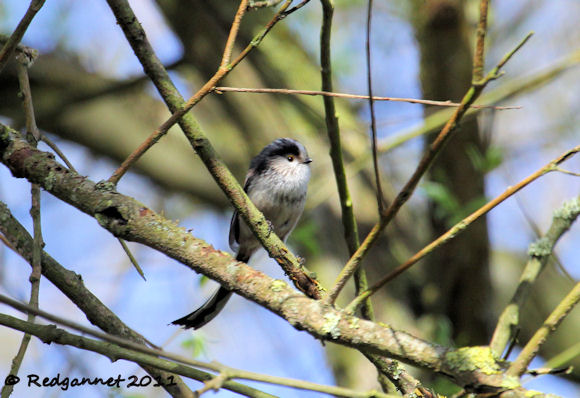
The Cat's back

Another bright morning enticed me into Mote Park while the rest of my family were bonding at the hairdressers (a grooming procedure that I no longer have any call for). A chilling wind was a cruel reminder that spring can be fickle. The breeze didn’t stop the birds singing on an otherwise beautiful morning, but it kept them off the outer perches, sheltering from the cold.
The Blackcaps were very vocal again this morning, joined by the Wrens and Chiff Chaffs. The Chiff Chaff, so obvious during the warmth and stillness of the past week, eluded me this morning, so they don’t appear in the list below. The Kingfisher also continues to elude me.
A Great Tit showed well in a sheltered spot in the lea of a Hawthorn tree close to the lake. The River Len had an extra flow to it today after showers yesterday afternoon which also served to depress the temperature. A Wood Pigeon sat for me at the Mote House end of the causeway. It hadn’t seen my approach and was now relying on the still and silent technique instead of the more usual clattering flight to avoid being seen.
Along with the Kingfisher, I was also hoping to capture some more shots of the Green Woodpecker and the Great Crested Grebe to make 10000 Birds gallery posts. The Green Woodpecker could be heard “yaffling,” but was not seen. The grebe is not a confiding bird and stayed beyond the effective range of my lens until I came across one on a nest. As I watched, the male came by to check on the sitting female. She looked disappointed that he had not brought a gift, but perhaps he was concerned to see me paying her too much attention.
I bumped into Simon the local blogger and his mum and joined them to walk across the grassed areas to the south of the lake. Thankfully, he forgave me my trespasses. A female Mallard looked as if she was considering a large fallen tree trunk as a potential nest site. She looked nervous at our approach. A drake flew up from the ground nearby to join her. It would be very easy to anthropomorphosize and imagine him putting a comforting wing around her as reassurance.
Simon ripped me with a Red Fox across the lawns and a Linnet that I didn’t see well enough to count, but we both saw the Herring Gulls and Eurasian Swallow that he called.
We strolled back to the Len where the Blackcaps and Wrens continued to serenade us and there we parted company. A Great Spotted Woodpecker was feeding in the trees across the stream and while I was looking for it a European Robin appeared and sat well for me.

Species seen; 31

Great Crested Grebe 5, Grey Heron 1, Mute Swan 6, Greylag Goose 1, Canada Goose 6, Mallard 15, Common Pheasant 3, Common Moorhen 3, Common Coot 8, Herring Gull 2, Black-headed Gull 60, Stock Dove 4, Common Wood Pigeon 30, Great Spotted Woodpecker 1, European Swallow 1, Northern Wren 2, Dunnock 5, Mistle Thrush 1, Song Thrush 2, Common Blackbird 4, European Robin 6, Blackcap 8, Long-tailed Tit 2, Great Tit 12, Blue Tit 15, Nuthatch 2, Eurasian Jay 4, Eurasian Magpie 7, Carrion Crow 15, Common Starling 3, Chaffinch 7.

Back at home 3 Common Buzzards were using the breeze to perform syncronised stunt flights across the small patch of sky over my garden.

Monday, 11 April 2011

Western Reef Egret

The Western Reef Egret, Egretta gularis, is a stocky, medium-sized heron that hails from the coastal waters of the Middle East and tropical Africa. The name implies that there must also be an Eastern Reef Egret, Egretta sacra, which is similar, but with noticeably shorter legs and less contrast between the legs and yellow feet. Abiding by the suggestion of its name, the Eastern Reef Egret is to be found in South-east Asia, Japan and Australasia.
Both species have light, dark and intermediate colour morphs. The dark morph is the more common and shows a white streak on its throat. The streak is less noticeable in the Eastern species.
In most cases the two species would not come into contact with each other. The most easterly of the Western Reef Egrets can be found as a remote population on the east coast of India (this population and the Sri Lankan birds may yet cause a taxonomic dilemma). The Eastern Reef Egrets’ westernmost population lives on the Andaman Islands, 1300kms across the Bay of Bengal (again, tick it in pencil).
In common with other egret species, the Western Reef Egret develops breeding plumage that includes elongated plumes on its back and hind neck. They breed in small colonies, often with other heron species. They are seldom seen far inland and prefer to feed on fish and crustaceans along rocky shores and beaches.
The individuals in the photographs were found in the Middle East where the schistacea race (also known as the Indian Reef Egret) occurs. The light morph bird was seen in Safa Park, Dubai 2011 and the dark one in Doha, Qatar 2008. Note the feet of the darker bird, they are rosy from the ankles down onto the feet, but yellow beneath.
The nominate race E. g. gularis is described from West Africa and has made recent forays to the USA, although it has yet to visit the UK.


Sunday, 10 April 2011

Poaching on the patchwork

I returned to Mote Park again today, for no other reason than it was another glorious day. Hopefully, Simon won't be too upset about me poaching on his patch. Just in case, this link will take you to the rightful Mote Park Bird Blog. This time I came in at the side gate for the path that leads along the bottom of Jenner’s Bank. The Chiff Chaff’s irregular song was easy to pick out again and the “Ticha Ticha” of the Great Tit was very noticeable.
A Red Fox at the top of the slope slunk into the deep bushes when it saw me. Two Sparrowhawks appeared in the sky above me. I could not distinguish sexes and assume that they were two males. For a moment, I wondered if the lower bird might be a cuckoo. Its wings seemed sharper and it looked a little bigger.
Blackcaps sang from the tangles as I walked down towards Old Pond and a female Blackbird sat for a picture on the other side of the stream.
On the lake a flock of Black-headed Gulls can usually be found. Today they counted a few Common Gulls in their number and a couple of Lesser Black-backed Gulls flew over. A Mute Swan was feeding from the new leaves on a bankside Weeping Willow. I had not previously noticed them feeding on tree leaves which are notoriously difficult to break down in the gut. More commonly I see them feeding in the fields or on grass and bankside vegetation. Are tree leaves any more difficult to digest than other greenery?
I bumped into John who joined me for a while. The Old Pond held some Eurasian Jays in the bushes on the far bank, but the Water Rail has not been seen there for some time.
We sat by the bank of the lake to watch the Great Crested Grebes performing their courting dance. Two pairs could be seen from where we sat, but they didn’t come close enough for a really good look. Both pairs gave their rendition of the ‘head to head’ display, fanning and raising their crest and cheek plumes during the mirrored dance. Only one of the pairs was seen, distantly, raising themselves from the water in the climax of the courtship known as the ‘penguin dance’. We tried changing our position on the bank to get a closer look, but the birds were difficult to predict and we felt as though we were chasing them and left them to their intimacies.
We were not so considerate to the swans. The cob was blowing bubbles in the water to impress his pen, a behaviour that neither of us had noticed before. Intrigued, John and I stopped to watch and witnessed the full blown intimacy of swans. While the prelude had seemed playful with both birds blowing bubbles and necking, the afterglow was tender and the birds took the moment strengthen their life-bond with an elegant dance.
John headed home and I followed the River Len upstream, still hoping to see a Kingfisher. A beautifully marked Mallard shone in the uncommon sunshine.
I crossed the river at the top bridge, intending to pass through the Yew forest on the way back to my car.
On the northern slope beyond the river is a damp patch of rank vegetation and a small Ash tree. A harsh bubbling call attracted my attention from the lower branches of the Ash. A Common Whitethroat (07/04/11) was singing, but without any real commitment. It stayed low as if not confident in his performance.

Species seen; 38

Great Crested Grebe 4, Grey Heron 3, Mute Swan 12, Greylag Goose (Feral?) 1, Canada Goose 8, Mallard 20, Tufted Duck 4, Eurasian Sparrowhawk 4, Common Moorhen 4, Common Coot 6, Common Gull 4, Black-backed Gull 2, Black-headed Gull 80, Stock Dove 8, Common Wood Pigeon 35, Eurasian Collared Dove 2, Great Spotted Woodpecker 1, Grey Wagtail 2, Northern Wren 3, Dunnock 3, Mistle Thrush 3, Song Thrush 1, Common Blackbird 6, European Robin 8, Common Chiff Chaff 5, Blackcap 5, Common Whitethroat 1, Long-tailed Tit 2, Great Tit 20, Blue Tit 25, Eurasian Nuthatch 3, Eurasian Jay 4, Eurasian Magpie 12, Eurasian Jackdaw 5, Carrion Crow 25, Common Starling 1, Chaffinch 8, European Greenfinch 1. 


Mote Park is a large park of 450 acres in Maidstone, Kent. The site of a large estate purchased by the Maidstone civic authority in 1929 and is now a public park. Parking is available during the day, but vehicle access is restricted between 08.00 and dusk. Outside of these times, parking is available at the leisure centre and pedestrian access to the park can be had from there. Pedestrian access points can be used anytime.
Maidstone BC has produced a site with all the relevant details
http://www.kent.gov.uk/leisure_and_culture/countryside_and_coast/parks_and_open_spaces/country_parks/mote_park.aspx


Saturday, 9 April 2011

While the cat is away....

It seems a little ironic that during the week I am spending at home, the local patch blogger has packed his binoculars and taken to the other side of the Atlantic. With a beautiful morning at my whim, I thought it might be nice to maintain the continuity of Simon’s four years of hard work documenting the wildlife of Mote Park. I would like to stress that this is an unofficial, flagrant trespass onto Simon’s patch and for a more complete site with archived posts, links and bird lists, visit http://motepark.blogspot.com/

I parked by the Willington Street Gate and entered slowly hoping to catch a Kingfisher on the small River Len which flows through the park and into the large lake before overflowing at the far end and off through Maidstone to meet the River Medway.
First birds seen this morning were Eurasian Magpies and the abundant Common Woodpigeon. I could hear a Chiff Chaff singing from the bushes lining the path climbing the slope to the left. The path here proved productive with Eurasian Robin, Black Cap and the first Eurasian Swallows (06/04/11) of the year. Eurasian Wrens were very common this morning with the strident, trilling song seemingly coming out of every patch of vegetation.
I wanted to stay close to the river to stand a reasonable chance of seeing a Kingfisher as it passed up and downstream. The Kingfishers have had it hard in the UK during the last couple of cold winters and their numbers have been hit dramatically. My records show that I have only seen 2 in the UK during the last 18 months. They were forced to migrate to the coast to find unfrozen water where they can feed, but many perished nevertheless. Simon has reported just one in the park so far this year.
A bridge crosses the river about 300 meters along the wide tarmac path. There were plenty of small Dace and Roach in the river here and it looked like a good place to stop. Incidentally, today was a glorious day, warm and bright, so to have the time to sit in the shade waiting for Kingfishers was a real pleasure. Chiff Chaff and Long-tailed Tits kept me entertained during my vigil, but most exciting was a pair of Green Woodpeckers who came to inspect a hole in the Alder tree on the far bank. First the male with his black rimmed red moustache took a look.
He appeared keen, but she was less impressed. The female wears a plain black moustache and this particular female had a narrow gap between the black of her face and the red of her crown where the green showed through. They stayed on the alder while trying to decide, sidling around to the blind side when dog walkers or joggers crossed the bridge and returning to inspect the hole again when it was quiet. They flew off to make up their minds, but didn’t come back during the hour or so that I stayed. It is quite a busy path and this may have swayed their decision. I later learned from John that a pair of Green Woodpeckers had used this hole last year.
There was a lot of activity this morning. Blackcaps were competing with Robins, Wrens, tits and Chaffinches to fill the morning with song. Beyond the bridge Nuthatches were pairing up and a Carrion Crow looked to be feeding chicks already. A drumming from overhead was a Great Spotted Woodpecker who was playing hard to tick. Green Woodpecker “yaffles” were heard throughout the morning, though I didn’t see any more.

Species seen; 32

Grey Heron 2, Mute Swan 1, Canada Goose 8, Mallard 6, Eurasian Sparrowhawk 1, Common Moorhen 4, Common Coot 6, Common Gull 5, Black-headed Gull 100, Stock Dove 6, Common Wood Pigeon 40, Great Spotted Woodpecker 1, Green Woodpecker 3, European Swallow 2, Northern Wren 8, Dunnock 2, Mistle Thrush 2, Song Thrush 1, Common Blackbird 4, European Robin 6, Common Chiff Chaff 5, Blackcap 5, Long-tailed Tit 3, Great Tit 15, Blue Tit 25, Eurasian Nuthatch 3, Eurasian Treecreeper 1, Eurasian Magpie 4, Carrion Crow 15, Common Starling 1, Chaffinch 5, European Goldfinch 1.


Blue Tit
 
Mote Park is a large park of 450 acres in Maidstone, Kent. The site of a large estate purchased by the Maidstone civic authority in 1929 and is now a public park. Parking is available during the day from 08.00, but vehicle access is restricted after dusk. For visits after dusk or early mornings, parking is available at the leisure centre and pedestrian access to the park can be had from there. Pedestrian access points can be used anytime.
 
Mote Park, Green Woodpecker,

Wednesday, 6 April 2011

Fragrant Hills Park in Beijing

I am tending towards the thought that I must be the only British bird watcher without a tick beside Bohemian Waxwing. Four people of my acquaintance (I hesitate to use the word ‘friends’ for lack of a timely phone call or text), have been able to watch flocks of Bombycillae in their own gardens (within easy reach of a telephone)! The irruption has been very impressive this winter, but as spring approaches, I fear that I have missed out. So it was with interest that I read a blog account of, not just Bohemian, but also Japanese Waxwings in Beijing (Peking). A picture of a mixed flock was a delight to behold and gave me the jolt that I needed to make use of a free afternoon in China.
 The schedule for this trip is not conducive to doing much. After a long flight, we reached the hotel at midday and would return early the next morning. The weather was poor with dreadful light and drizzle. Only the thought of two waxwings in one hit provided enough motivation for this jet-lagged flight attendant to venture out and explore.
It was almost 13.00 by the time I reached the Fragrant Hills. An entrance fee of Huan 10 saw me through the gate where I turned right and followed the paths that meander through the lower gardens.
Bramblings and Dusky (?)(Naumann's) Thrush

My tip for birding in Beijing is to make yourself familiar with the sparrows and magpies to avoid being constantly distracted by them. Eurasian and Azure-winged Magpies were noisy and obvious; Eurasian Tree Sparrows were even more abundant. A drumming Great Spotted Woodpecker drew me into a stand of trees where a small flock of thrushes evaded identification in the stygian gloom. If anyone would care to venture an opinion, I would be pleased. Especially if your opinion leads me to Dark-throated Thrush (but they were probably Dusky)!
A moment’s excitement at seeing a Grey-capped Greenfinch was short-lived when I realised that it was an Oriental Greenfinch using an alias. I tweaked the overexpose setting to get any kind of picture, but could do nothing about the high, silhouetted birds.
A flock of small birds flew in and settled in the top of a leafless tree. Normally Bramblings have enough colour to make them stand out, but even at just past lunch-time, the light was so appalling that I did not recognise them in the photo when I got home. A small tit could have been either Willow or Marsh. The voice might have been decisive if I had recognised it, but after seeking advice, it seems that it was most likely to have been a Marsh Tit.
By following the signs through the lower gardens to Spectacles Lake, I found myself at the bottom of a chair-lift. G.L. (may all the saints bless him) had suggested that I take the cable car to the summit and walk back down. Note the use of “cable car” in G’s suggestion, which gives the impression of an enclosed, warm, comfortable conveyance.

It was a ski-type chair-lift, open to the elements which were currently raining down on me. He also forgot to mention that the lift ascended 400meters vertical height to Xianglu Peak. At the top it was snowing and G’s idea (may he burn in seven kinds of Hell), had lost all of its appeal.
I was astonished to watch locals scaling the hillside as I took the lazy way up, but noticed what I guessed to be votive tokens at the summit. I surmise that the climb is made as a pilgrimage of some sort. The air was regularly split by cries of anguish as the legs weakened, or perhaps they were shouts of self-motivation to complete the undertaking.                      
The precipitous, uneven steps leading down would be perilous at the best of times. In snow, they were treacherous, but I needed to descend as the rain caught in the cups of my binoculars was freezing over and the wind was blowing sleet into my eyes. I was halfway down before any kind of bird watching was possible. Much of the hillside is covered by scrubby bushes which on this first day of April were still bare, but the peach and almond trees were wearing pink and white blossom in anticipation of spring. A Daurian Redstart, his red tail vibrating, picked between the bases of the bare bushes.
The magpies and sparrows were still abundant, but I had learned to ignore them and happily did so in favour of a black squirrel feeding in a small evergreen by the path. I would love to know his name if anyone can tell me. A Goldcrest called from the adjacent conifer. Through the stand of conifers, the path levelled out for a few pleasant moments. A male and female Red-flanked Bluetail skulked in a patch of bushes in the evergreen area.

Soon I reached the lower slopes and found myself at ‘Lotus View’ which used to comprise of viewing towers until 1860 when they were destroyed by the Anglo-French joint forces. A villa stands there now. Great Tits showed briefly with a Meadow Bunting. Oriental Turtle Doves were calling with a coarse tone that did not match the “melodious” description in the field guide. Lotus View would be easy to reach on foot without recourse to the chair-lift and I only saw 2 species above here that I didn’t see elsewhere.

Now that I had returned to the bottom of the hill, I realised that I had not seen any fruit or berry trees that might have attracted waxwings. By April, I am sure that most of the berries would have been eaten or would be giving way to new growth, so the birds that feed on them during the winter would be moving on and that my chance to see the waxwings here had passed also.

I was cold and wet, my gear was soaked and my lenses were fogging up. I decided to call it a day.

As I passed through the gate a flock of birds flew across the small square and into the bare crown of a tree on the other side. I took a look through my binoculars out of habit more than anything else. Crests! They had crests! Waxwings, a hundred plus, but which ones? The light had not improved all day and I was unable to see any colour at the end of the tail. Bohemians would have had yellow tips, while Japanese sport a red terminal band, but it was simply impossible to pick out any detail. This was not how I had hoped my first picture of a Waxwing would turn out!
I tried to get closer, but they were in a tree beyond a wall with no access to get any closer. I tried to adjust my angle to make the best use of the available light. Some birds had shaggy crests and light patches visible on the wings by which I was at last able to identify them as Bohemian Waxwings. But what of those without light patches? I took photos with the intention of brightening, super-zooming and colour-enhancing. I managed to get the tiniest hint of yellow on a few, but more than half of them still remain a toss-up.

Thank you to Terry Townsend for the inspiring picture of the mixed flock of waxwings, for his reply to an RFI and his thoughts on tits. Thank you also to Birding Pals Jianqiang Li and Lijin Zeng for putting me on the right route for info.

Fragrant Hills will soon be connected to the city when the new subway station opens there. Since that was unlikely to be completed by this afternoon, I selected the taxi option which took 30 minutes and cost Huan 85 (@9.5 = £1). The park is about 10 kms beyond the Summer Palace in the northwest of the city. The journey will take you past the Botanical Gardens which are within walking distance of the entrance Gate to Fragrant Hills. From the hotel (by the north-east section of Beijing’s 3rd ring road), it can take much longer than half an hour, depending on traffic. It took an hour for the return journey. The subway will take approx 50 minutes when complete and involve two changes of train. The chair-lift ride cost Huan 50.

Also known as Xiangshan Park, Fragrant Hills Park can be found at Google Earth ref; 39°59'22.82"N 116°11'24.70"E.

Species seen; 17

Oriental Turtle Dove 6, Eurasian Collared Dove 1, Spotted Dove 4, Great Spotted Woodpecker 2, Bohemian Waxwing 120, Red-flanked Blue-tail 2, Daurian Redstart 2, Goldcrest 1, Marsh Tit 1, Great Tit 2, Azure-winged Magpie 120, Eurasian Magpie 35, Large-billed Crow 4, Eurasian Tree Sparrow 200, Brambling 80, Oriental Greenfinch 1, Meadow Bunting 1.

Beijing, PEK, Fragrant Hills